
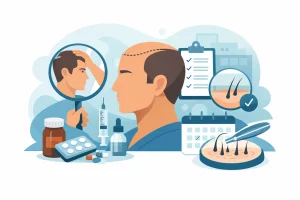
How to Prepare for Hair Transplant Surgery
Learn how to prepare for hair transplant surgery with clear advice on assessments, medicines, scalp care, recovery planning and realistic expectations.
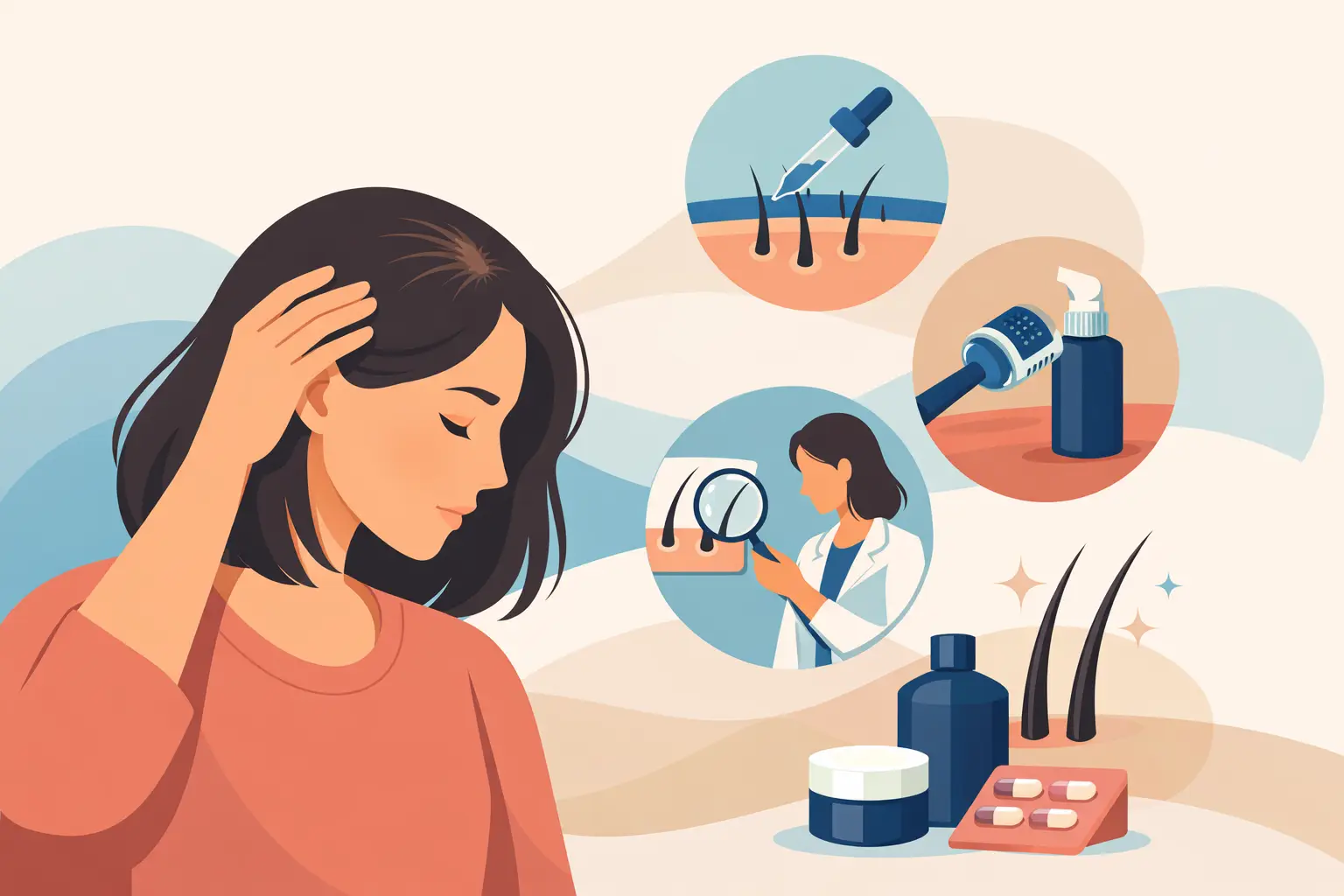
Hair loss rarely starts as a dramatic event. More often, it shows up in the shower drain, in wider partings, in photos taken under bright light, or in that quiet moment when your ponytail no longer feels as full as it used to. If you are asking what is the most effective treatment for women’s hair loss, the honest answer is not a single product or procedure. It is the treatment that matches the cause, the stage of loss, and the condition of your scalp.
That distinction matters. Women’s hair loss is not one condition. Female pattern hair loss, telogen effluvium, traction alopecia, hormonal shedding, scalp inflammation, nutritional deficiency, and post-partum thinning can all look similar at first glance. Yet they do not respond equally to the same plan. This is why women often spend months, sometimes years, trying shampoos, oils, supplements, and salon treatments that promise growth but do little to change the real problem.
In specialist practice, the most effective treatment for women’s hair loss is usually a personalised combination approach. For many women, that means identifying the underlying trigger, improving scalp health, and using evidence-based treatments such as topical or oral medication, PRP therapy, targeted supplementation where appropriate, and ongoing monitoring.
There is no serious trichologist or hair restoration practitioner who can responsibly say one treatment works best for every woman. Minoxidil may be highly effective for one patient with female pattern thinning. PRP may help another who needs stimulation and support but is not a candidate for certain medications. A woman with active shedding caused by iron deficiency or thyroid imbalance may not improve until that internal issue is corrected. Someone with scalp irritation or build-up may struggle to get results until the scalp barrier is addressed first.
The strongest results usually come from precision, not from guessing.
The biggest mistake in female hair loss care is treating the symptom while ignoring the reason behind it. Hair follicles are influenced by hormones, stress, illness, inflammation, styling habits, genetics, and nutrition. Two women can present with thinning around the crown and still need completely different plans.
A proper assessment looks at the pattern of loss, duration, recent health changes, family history, scalp condition, and whether the issue is shedding, miniaturisation, breakage, or a combination of all three. This step is where many women finally feel relief. It turns a vague fear into a clear clinical picture.
That clarity also protects you from wasted time. If the issue is female pattern hair loss, early intervention matters because miniaturised follicles become harder to rescue over time. If it is telogen effluvium, the goal is often to stabilise shedding and support recovery rather than use aggressive long-term treatment. If traction is the cause, changing hair practices may be as important as any topical or in-clinic therapy.
For female pattern hair loss, minoxidil remains one of the most established treatment options. It can help extend the growth phase and support thicker, longer-lasting hairs. Used consistently and correctly, it can make a meaningful difference, especially when thinning is recognised early. The trade-off is patience. Hair growth is slow, and visible improvement usually takes months, not weeks. Some women also experience irritation with topical formulations, which is why scalp sensitivity needs to be considered.
In selected cases, oral medication may also be part of treatment. This is not suitable for everyone and should be prescribed with proper medical oversight, particularly in women of childbearing age or those with relevant health considerations. When appropriate, however, oral treatment can be very effective in slowing progression and improving density.
PRP therapy is another important option, especially for women who want a science-backed regenerative treatment as part of a broader plan. PRP uses the patient’s own platelets to deliver growth factors to the scalp, with the aim of supporting follicle activity and improving hair quality. It is not a miracle fix, and results vary, but in the right candidate it can be a valuable treatment for thinning hair and early-stage loss. It often works best as part of a series and tends to be most effective when the follicles are still active.
If the issue is telogen effluvium, the most effective treatment is usually trigger-led rather than purely cosmetic. That might mean addressing stress, recovering after illness, correcting a deficiency, supporting hormonal recovery after childbirth, or reviewing medication changes. In these cases, over-treatment can be unhelpful. The focus should be on creating the conditions for regrowth while protecting scalp health and monitoring progress.
For women with inflammatory scalp conditions, the scalp itself may be the barrier to better growth. Excess oil, sensitivity, scaling, redness, itching, and follicular inflammation can all interfere with progress. Here, a scalp-health-led plan is often one of the most effective starting points. It may not sound as dramatic as an injectable treatment, but restoring the scalp environment is fundamental. Healthy hair growth needs a healthy scalp.
This is often underestimated. Many women think of hair loss as a follicle problem only, but the scalp is the environment in which follicles function. If there is chronic inflammation, congestion, heavy residue, or sensitivity, even strong treatment plans can underperform.
A specialist will usually assess whether the scalp is dry, oily, irritated, reactive, or affected by conditions such as seborrhoeic dermatitis. Sometimes the first visible improvement is not instant regrowth but a reduction in shedding, itching, and irritation. That is still progress. It means the scalp is becoming more supportive of healthy hair cycles.
At Dubai Hair Doctor, this scalp-first thinking is central to how long-term results are built. It is one reason personalised care tends to outperform off-the-shelf routines.
The question of what is the most effective treatment for women’s hair loss often assumes there should be one best answer. In reality, the most effective plan is often layered.
A woman with female pattern thinning may benefit from minoxidil, PRP, scalp therapy, and a maintenance routine designed around her sensitivity level and hair care habits. A post-partum patient may need reassurance, targeted support, and monitoring rather than heavy intervention. A woman preparing for or recovering from a hair transplant may need pre- and post-operative scalp support to protect existing hair and improve overall density.
Combination treatment works because hair loss is rarely one-dimensional. It respects the biology of hair growth, the role of the scalp, and the fact that visible results usually come from steady, guided treatment rather than a single dramatic step.
A trustworthy answer should always include limits. Not every follicle can be revived. Not every woman will return to the density she had at eighteen. And not every treatment suits every lifestyle, budget, or medical profile.
What good treatment should do is stop unnecessary progression, reduce shedding where possible, improve hair calibre, support regrowth in recoverable follicles, and give you a clear plan for maintenance. For many women, that is life-changing. Hair may not become identical to how it once was, but it can become visibly healthier, fuller, and easier to manage.
The timeline matters too. Hair treatment requires consistency. Most meaningful improvement is measured over three to six months, with fuller evaluation often taking longer. Quick fixes usually disappoint because the hair cycle simply does not move at the speed marketing claims it does.
If your parting is widening, your scalp is becoming more visible, your shedding has increased for more than a few weeks, or you have already tried products without success, it is worth getting a proper assessment. The earlier the cause is identified, the more treatment options are usually available.
This is especially true if you have a family history of thinning, signs of hormonal change, a sensitive scalp, or hair loss after a stressful event or illness. Waiting in the hope that it will sort itself out can sometimes allow a treatable problem to become more established.
The right support should feel clear, honest, and tailored. You should understand what type of hair loss you have, what can realistically be improved, which treatments are worth considering, and how progress will be reviewed over time.
The most effective treatment for women’s hair loss is the one built around you, not the one with the loudest promise. When the diagnosis is accurate and the plan is personalised, hair recovery becomes far more than guesswork – it becomes a structured path back to healthier hair and stronger confidence.
Learn how to prepare for hair transplant surgery with clear advice on assessments, medicines, scalp care, recovery planning and realistic expectations.
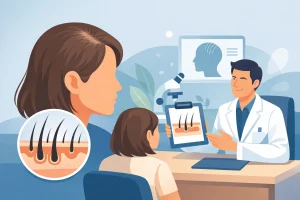
Hair thinning can have many causes. Learn how a specialist scalp assessment identifies triggers and builds a clear plan for healthier, fuller-looking hair.
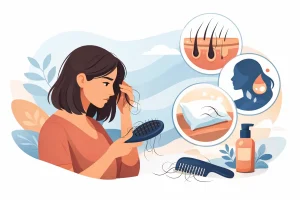
What causes female hair loss? Learn about hormones, stress, nutrition, scalp health and medical factors, plus when personalised expert care can help you.
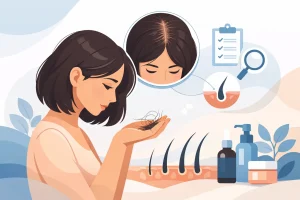
Female hair loss treatment starts with a specialist assessment, scalp health and a personal plan for stronger, fuller-looking hair and renewed confidence.