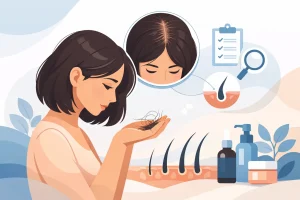
Searching for the best hair loss treatment for female home remedy? Learn what can support healthier hair and when expert care is the wiser next step now.
Seeing more hair in your brush, shower drain or ponytail can feel deeply personal. When you search for the best hair loss treatment for female home remedy, you are usually looking for something practical, private and reassuring. Home care can support healthier hair and scalp conditions, but it cannot reliably correct every cause of hair loss. The most useful approach starts with understanding what your hair is telling you.
For many women, thinning is not simply a cosmetic concern. It can affect confidence, how you style your hair and how comfortable you feel in everyday life. The good news is that early, informed action often gives you more options than waiting and hoping a single oil, supplement or shampoo will solve the problem.
What a home remedy can – and cannot – do
A sensible home routine can reduce avoidable breakage, support scalp comfort and help create the right conditions for healthy growth. It may be particularly useful when hair has become dry, stressed by heat styling or fragile after colouring, tight hairstyles, illness or a demanding period of life.
However, home remedies do not treat every form of hair loss. Female-pattern hair thinning, hormonal changes, iron deficiency, thyroid concerns, inflammatory scalp conditions and shedding after childbirth can all require a different response. A treatment that works beautifully for one person may do very little for another because the underlying cause is different.
Be cautious of claims that a kitchen ingredient can regrow a receding parting or reverse long-standing thinning. Oils and masks can make the hair shaft feel softer and look shinier, which is valuable, but cosmetic improvement is not the same as stimulating new growth from the follicle.
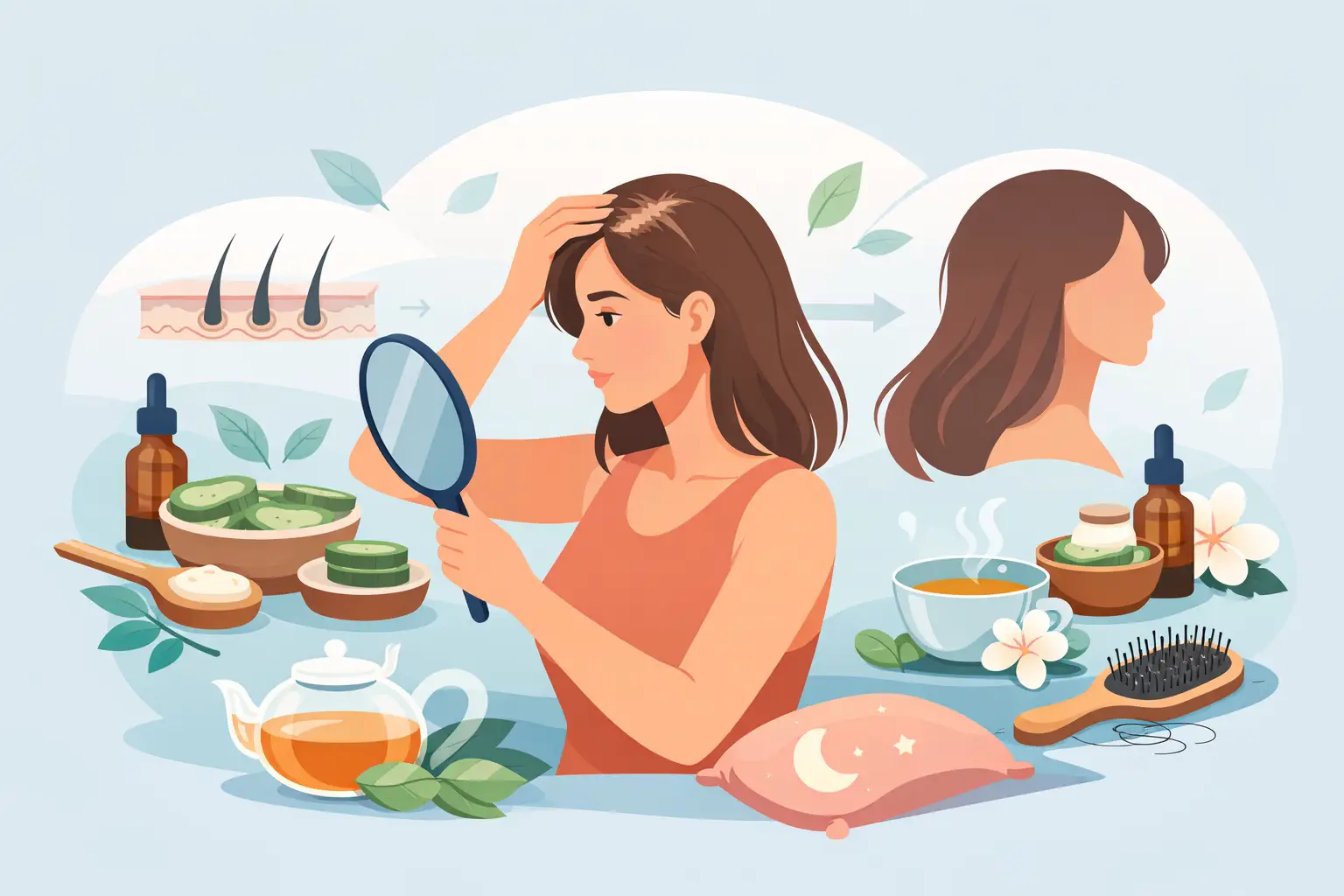
The best female hair loss home remedies to start with
Build meals around hair-supporting nutrition
Hair is made largely of protein, so consistently under-eating protein can contribute to weaker, slower-growing hair. Include quality sources such as eggs, fish, chicken, yoghurt, lentils, beans, tofu and nuts according to your dietary needs. Iron, zinc, vitamin D, B12 and folate also matter, particularly for women with heavy periods, restrictive diets or ongoing fatigue.
Supplements are not automatically the answer. Taking high doses without knowing what you need can be wasteful and occasionally unhelpful. For example, excess vitamin A has been associated with hair shedding. If your hair loss is persistent or sudden, blood tests arranged through a qualified clinician can identify deficiencies more accurately than guessing.
Treat the scalp as part of the treatment plan
Healthy hair grows from the scalp, not from the length of the hair. Wash regularly enough to remove sweat, oil, product build-up and flakes, using a gentle shampoo suited to your scalp rather than choosing solely for your hair texture. There is no rule that everyone should wash daily or only once a week – the right frequency depends on oiliness, exercise, styling products and scalp symptoms.
A light fingertip massage during washing can feel soothing and may help you become more aware of tenderness, scaling or irritation. Avoid scratching with nails, aggressive scrubbing and heavy oils left on an inflamed scalp. If you have itching, persistent dandruff, soreness, crusting or spots, this is not a situation to cover up with more oil. It needs proper assessment.
Reduce breakage before chasing growth
Not all apparent hair loss is shedding from the root. Sometimes the hair is breaking along the shaft due to bleaching, chemical treatments, frequent heat or tension. This can make the hair look noticeably thinner even when follicle growth is unaffected.
Give fragile hair a quieter routine for several weeks. Use a heat protectant, lower the temperature of styling tools, detangle gently from the ends upwards and avoid tight ponytails, braids or extensions that pull at the hairline. Choose a soft scrunchie or loose style where possible, especially at night. These changes will not cure female-pattern thinning, but they can prevent additional damage while you address the bigger picture.
Use oils with realistic expectations
Rosemary oil is often promoted as a natural hair-growth solution. Although there is limited early research and many personal success stories, the evidence is not strong enough to treat it as a proven replacement for medically supported treatment. If you enjoy using it, always dilute essential oil in a carrier oil, patch test first and stop immediately if you experience burning, itching or redness.
Castor oil, coconut oil and other oils may improve softness and reduce friction for some hair types. They do not have reliable evidence for reversing genetic or hormonal hair loss. Thick oils may also worsen build-up or scalp inflammation in certain people, especially in Dubai’s heat and humidity. The best routine is the one your scalp tolerates well, not the one with the loudest online claims.
Protect sleep, recovery and stress levels
Stress does not cause every kind of hair loss, but a significant physical or emotional event can trigger diffuse shedding several weeks or months later. This is often seen after fever, surgery, rapid weight loss, childbirth, bereavement or prolonged stress. The shedding can be distressing, yet it is often temporary once the trigger has passed.
Regular meals, adequate sleep, gentle movement and realistic stress support will not provide instant regrowth, but they are meaningful foundations for recovery. Avoid punishing diets or intense supplement regimes when you are already worried about shedding. Hair responds slowly, and consistent care is usually more helpful than dramatic changes.
When a home approach is not enough
It is time to seek expert advice if you notice widening of the parting, visible scalp through the crown, a receding hairline, bald patches, sudden heavy shedding or loss of eyebrows or body hair. The same applies if hair loss comes with fatigue, changes in weight, irregular periods, acne, new facial hair growth, scalp pain or marked itching.
Women commonly delay seeking support because they assume hair loss is something they must simply accept or manage with styling. Yet a detailed consultation can identify patterns that are easy to miss at home. A specialist may assess your history, scalp condition, shedding pattern, lifestyle, nutrition, medications and hormonal factors before recommending a personalised plan.
Depending on the diagnosis, evidence-based options may include topical treatments, correction of an identified deficiency, scalp treatment, PRP therapy or a structured prevention programme. These are not one-size-fits-all choices. Pregnancy, breastfeeding, medical history and the type of hair loss all affect what is appropriate.
A more confident next step for your hair
At Dubai Hair Doctor, female hair loss is approached with the care it deserves: a thorough understanding of the cause, a focus on scalp health and a plan that is realistic for your lifestyle. Rather than promising a miracle remedy, the aim is to help you make informed decisions and measure progress over time.
Take clear photographs of your parting and hairline in the same light once a month, rather than judging your hair day by day. If thinning or shedding continues beyond a few months, or feels worrying at any stage, a professional assessment can turn uncertainty into a clearer path towards healthier hair and renewed confidence.