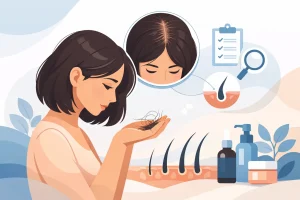
Find the best female hair thinning treatment for your cause, from scalp-led care and PRP to proven medical support, with an expert plan for confidence.
A widening parting, more scalp visible beneath bright Dubai sunlight, or a ponytail that no longer feels like your own can be deeply unsettling. The best female hair thinning treatment is rarely a single shampoo, supplement or procedure. It is a plan built around why your hair is changing, what your scalp needs, and what can realistically support healthier density over time.
For many women, thinning is not simply a cosmetic concern. It can affect confidence, social plans and the way you feel when you look in the mirror. You deserve clear answers and supportive, specialist-led care – not another product promising instant regrowth.
Why the cause comes before treatment
Female hair thinning has several possible causes, and more than one can be present at the same time. Female-pattern hair loss is common and often appears as gradual widening through the central parting, while the frontal hairline may remain relatively intact. It can be influenced by genetics, hormonal sensitivity and ageing.
Other women experience telogen effluvium, a period of increased shedding that may follow stress, illness, surgery, rapid weight loss, childbirth, thyroid changes or low iron stores. Hair can also be affected by polycystic ovary syndrome, restrictive diets, certain medicines, tight hairstyles, inflammation and persistent scalp conditions. Patchy hair loss, soreness, burning, scaling or shiny areas of scalp need prompt assessment, as these signs can point to conditions that require medical attention.
This is why copying a friend’s routine or buying the most expensive serum is often disappointing. A treatment suitable for genetic thinning may not address shedding after illness. Equally, improving nutrition alone may not resolve a pattern of hair loss driven by follicle sensitivity. A detailed consultation helps separate assumptions from evidence.
What a specialist assessment should include
A meaningful hair consultation starts with your story. When did the shedding begin? Is the change sudden or gradual? Have you had recent illness, hormonal changes, stress, changes in diet or new medication? Family history, menstrual history and hair-care practices can all offer useful clues.
The scalp and hair should then be examined closely. A trichology-led assessment considers density, follicle appearance, hair shaft quality, shedding patterns and scalp health. Where appropriate, your practitioner may recommend discussing blood tests or medical review with your GP or specialist to investigate factors such as iron status, thyroid function, vitamin deficiencies or hormonal concerns.
Good care is also honest about the starting point. Some follicles are inactive but still capable of producing stronger hair; others may have become significantly miniaturised. Early action generally offers the best opportunity to preserve density, but even long-standing thinning can often be managed with a thoughtful plan.
Best female hair thinning treatment: the options that matter
The right programme may combine clinical treatment, scalp care and lifestyle support rather than relying on one approach. Your suitability, medical history, diagnosis, budget and expectations all matter.
Evidence-based medical support
For some forms of female-pattern hair loss, a clinician may recommend or prescribe topical minoxidil. It is one of the better-established options for encouraging follicles to remain in their active growth phase. Results are gradual, commonly taking several months, and an early increase in shedding can occur as the hair cycle adjusts.
Minoxidil is not right for everyone. It requires consistency, can irritate sensitive scalps, and should be discussed carefully if you are pregnant, breastfeeding, planning pregnancy or have relevant medical conditions. Stopping treatment may mean losing gains that were dependent on it, so it is best approached as a longer-term commitment rather than a quick fix.
In selected cases, doctors may also consider hormonal or oral treatments. These require proper medical assessment and monitoring, particularly where pregnancy is possible or there is a history of hormonal, cardiovascular or other health concerns. The safest choice is always individual.
PRP therapy for suitable candidates
Platelet-Rich Plasma, or PRP, uses a concentrated preparation from your own blood, placed into targeted areas of the scalp. The aim is to support the follicle environment using growth factors found in platelets. It is commonly considered for women with early to moderate thinning, particularly alongside a wider hair-restoration plan.
PRP can be a valuable option, but it is not a guarantee and it does not replace diagnosis. Response varies according to the cause and stage of thinning, and a course of sessions with maintenance may be recommended. It tends to be most useful when follicles are still present and treatment begins before thinning becomes advanced.
At Dubai Hair Doctor, PRP is considered as part of a personalised scalp and hair recovery programme, rather than offered as a standalone answer for every concern. This protects both your investment and your expectations.
Scalp health and targeted home care
A healthy scalp does not cure every type of hair loss, but inflammation, excess build-up, dandruff, itching and irritation can make the hair environment less favourable. Targeted cleansing, treatments for specific scalp concerns and appropriate products can improve comfort and support the condition of existing hair.
Be cautious with heavily fragranced oils, aggressive exfoliation and frequent DIY remedies. They can irritate the scalp or cause build-up, especially when shedding has left you understandably tempted to try everything at once. A simpler routine, chosen for your scalp condition and used consistently, is usually more helpful.
Nutrition and correction of underlying factors
Hair is not a non-essential tissue from the body’s point of view. When nutrition is inadequate or the body is under strain, hair growth may be affected. Protein intake, iron status and overall dietary balance can be relevant, particularly after restrictive eating, gastrointestinal issues, pregnancy or major weight changes.
Supplements should not be treated as harmless defaults. Taking high doses without a confirmed need may be ineffective and, in some cases, unhelpful. A specialist can help you identify when nutritional support is appropriate and when the real priority is medical investigation, scalp treatment or pattern-hair-loss management.
Cosmetic coverage while treatment progresses
Clinical hair recovery takes time. In the meantime, fibres, scalp concealers, strategic cuts and gentle styling can make a genuine difference to confidence. These options do not interfere with the emotional importance of treatment; they give you more control while you wait for biological change.
Avoid styles that create persistent tension at the hairline, including tightly secured extensions, braids and ponytails. If you wear extensions or hairpieces, fitting and removal should be gentle and reviewed regularly to protect vulnerable areas.
Setting expectations for visible results
Most healthy hairs grow slowly, so meaningful improvement is measured in months, not days. The first goal may be reducing excessive shedding or stabilising further loss. Improved hair quality, new short growth and a less visible parting may follow gradually.
Photography and repeat scalp assessments are valuable because daily mirror checks can be misleading. Lighting, hair position and washing frequency all change how dense hair appears. Comparing standardised images over time gives a clearer view of progress and helps guide adjustments to your plan.
The best outcome is not always a return to the hair density you had at sixteen. Often, it is stronger retention of existing hair, visibly improved coverage, a calmer scalp and the confidence of knowing you have a plan grounded in your needs. Starting with a private specialist consultation can turn uncertainty into practical next steps – and give your hair the consistent support it has been asking for.