Learn how to improve scalp health with a simple, science-led routine, and know when persistent itching, flakes or thinning needs timely specialist care as well.
Your scalp can feel uncomfortable long before your hair begins to look different. Persistent itching, oiliness, flakes, tenderness or a tight feeling after washing are not simply cosmetic frustrations. They can be signs that the scalp barrier is irritated or that an underlying condition needs attention. Learning how to improve scalp health starts with treating the scalp as skin that deserves thoughtful, consistent care – not as an afterthought to your hair routine.
For anyone noticing shedding or reduced density, this matters even more. Healthy follicles need a calm, well-maintained scalp environment, but scalp care alone cannot correct every cause of hair loss. The most effective approach is to improve the daily conditions you can control, while seeking specialist guidance when symptoms or thinning persist.
Why scalp health affects hair quality
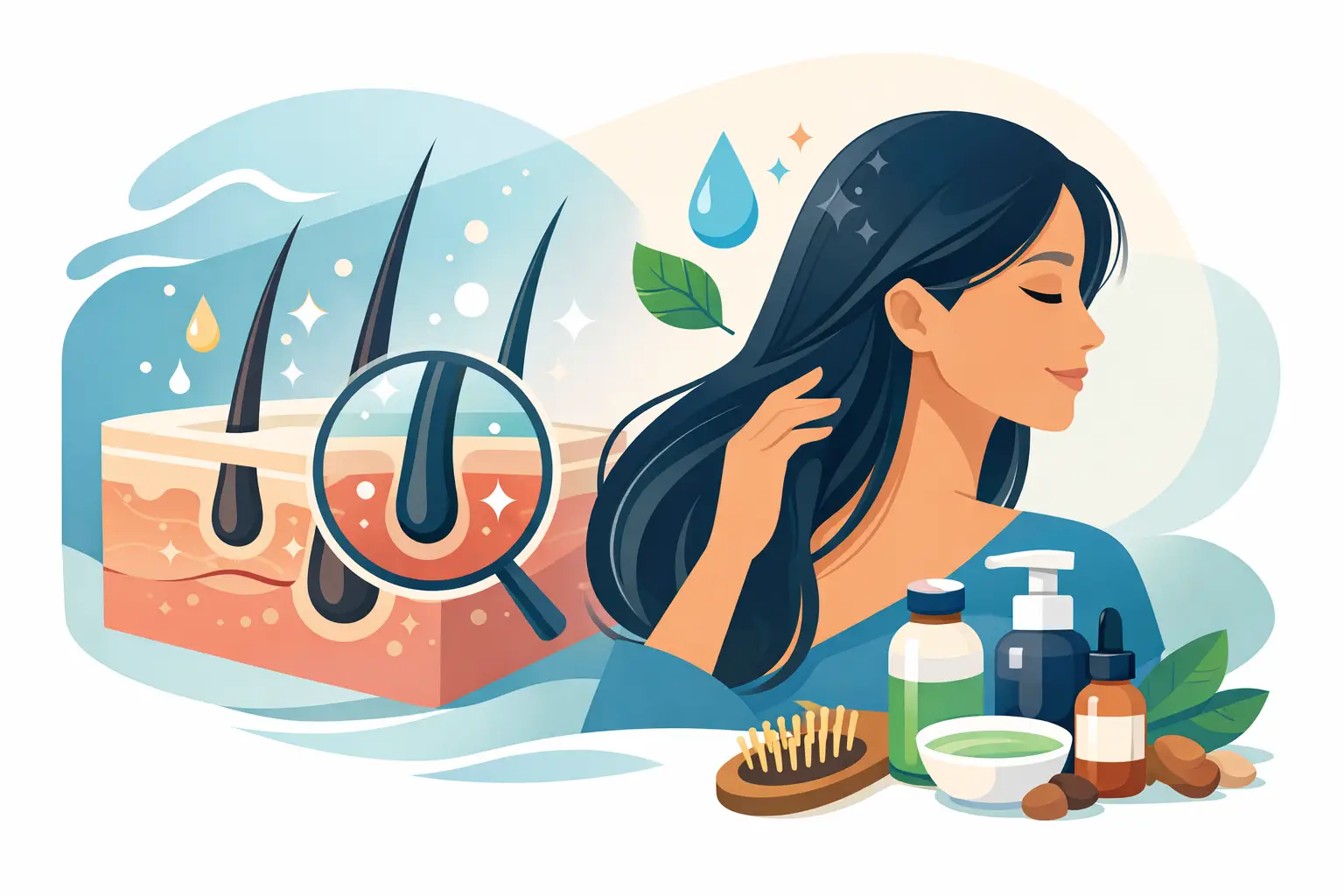
Your scalp is home to hair follicles, oil glands and a complex skin barrier. This barrier helps retain moisture and protect against irritation from heat, sweat, pollution, styling products and frequent washing. When it is disrupted, you may experience dryness, sensitivity, excess oil production, flaking or inflammation.
Inflammation can make the scalp feel sore or itchy and may contribute to increased shedding in some people. Equally, a scalp that becomes oily very quickly is not necessarily “dirty”. It may be responding to unsuitable products, overwashing, hormonal changes or an underlying scalp condition.
In Dubai and across the GCC, intense heat, air conditioning, perspiration and frequent styling can add further pressure. Build-up from dry shampoo, oils or heavy leave-in products can also make the scalp feel congested. The answer is not harsh cleansing. It is choosing care that respects your individual scalp type and the condition of your hair.
How to improve scalp health with a consistent routine
The right routine should leave your scalp comfortable, clean and balanced between wash days. It does not need to involve a shelf full of products. In fact, repeatedly changing shampoos and treatments can make it harder to identify what is causing irritation.
Cleanse according to your scalp, not a fixed rule
There is no universal rule that everyone should wash their hair daily or only once a week. If your scalp becomes noticeably oily, sweaty or itchy after exercise, more frequent gentle cleansing may be appropriate. If your hair is dry, textured or chemically treated, you may need to wash less often while ensuring the scalp is still cleansed properly.
Use lukewarm water rather than very hot water, which can strip the scalp and worsen dryness. Apply shampoo primarily to the scalp, using your fingertips rather than your nails. A gentle massage is enough to lift oil and product residue without scratching the skin. Let the lather run through the lengths as you rinse, then apply conditioner mainly from the mid-lengths to the ends.
If you use styling products, dry shampoo or scalp oils regularly, consider whether you need an occasional deeper cleanse. This should be purposeful, not aggressive. Overusing clarifying shampoos can leave a sensitive scalp feeling tighter and more reactive.
Treat flakes according to their cause
Flakes are often assumed to mean a dry scalp, yet this is not always the case. Fine, dry flakes may occur with irritation or a weakened skin barrier. Greasy, yellowish scales, persistent itch and redness may be associated with dandruff or seborrhoeic dermatitis. Product build-up can look similar, which is why self-diagnosis is not always reliable.
A targeted anti-dandruff shampoo can be useful for some people, but it should be used as directed and given enough contact time on the scalp before rinsing. If your symptoms do not improve, or they return as soon as you stop treatment, a professional assessment is more valuable than cycling through increasingly harsh products.
Be selective with oils, scrubs and home remedies
Scalp oiling can feel soothing for some people, particularly before washing, but it is not essential for healthy hair growth. Heavy oils may be difficult to remove and can aggravate flaking or follicle irritation in others. The same principle applies to physical scalp scrubs. Used too frequently, abrasive particles can create tiny areas of irritation rather than a cleaner scalp.
Avoid applying undiluted essential oils, lemon juice, bicarbonate of soda or other online remedies directly to the scalp. Natural does not automatically mean gentle. A sensitised scalp can react strongly, especially if there is eczema, psoriasis, dermatitis or broken skin.
Protect the scalp from everyday stressors
Scalp health is shaped by more than shampoo. Tight ponytails, extensions, braids and frequent slicked-back styles can place repeated tension on the follicles, particularly around the hairline and temples. If a style feels painful or causes headaches, it is too tight. Over time, traction can lead to breakage and, in some cases, more lasting hair loss.
Heat styling also has a place in the conversation. Hot tools mainly damage the hair shaft, but a very hot dryer held too close can irritate the scalp. Use a moderate temperature, keep the dryer moving and avoid applying heat to one area for prolonged periods.
Colouring, bleaching, smoothing and relaxing treatments can be safely managed when performed carefully, but they may not suit an already inflamed or tender scalp. Tell your stylist if you have itching, soreness, active flakes or recent shedding. Postpone chemical services if the scalp is compromised rather than trying to cover up the problem.
Sun protection matters too. A widening parting or thinner crown can leave more scalp exposed to UV. A hat is often the simplest practical protection when spending time outdoors. Choose one that fits comfortably and does not pull at the hairline.
Look beyond products when hair is thinning
A better routine can improve comfort and reduce avoidable irritation, but it is not a cure for genetic hair loss, hormonal changes, nutritional deficiency, thyroid concerns, autoimmune conditions or stress-related shedding. This distinction is reassuring because it prevents you from blaming yourself when a shampoo does not solve a medical issue.
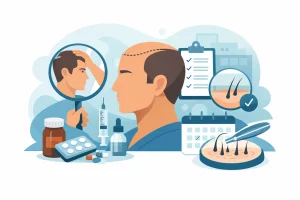
Female-pattern hair thinning may first appear as a broader parting, reduced volume at the crown or a ponytail that feels less full. Men may notice recession, crown thinning or increased scalp visibility. Sudden shedding after illness, childbirth, rapid weight change, emotional stress or a major dietary change also deserves a closer look.
Nutrition supports the hair growth cycle, but supplements should not be treated as a shortcut. Taking iron or other high-dose nutrients without evidence of deficiency can be unhelpful and occasionally harmful. A clinician can advise whether blood tests, dietary support or medical treatment should form part of your plan.
When to seek specialist scalp advice
Book an assessment if itching, burning, redness, scaling or tenderness continues despite a sensible routine. You should also seek advice for patches of hair loss, pustules, scarring, pain, sudden heavy shedding or a clear change in density. These symptoms need proper evaluation, particularly when they affect your confidence or have been dismissed as “normal”.
At Dubai Hair Doctor, scalp and hair concerns are assessed in context. A personalised consultation considers your pattern of loss, scalp condition, medical history, styling habits and goals before recommending a plan. Depending on the findings, this may involve targeted scalp treatment, hair loss prevention support, PRP therapy or advice to coordinate care with another medical professional.
The aim is not to promise overnight transformation. It is to understand what is happening, protect the follicles you have and create a treatment pathway that is realistic for your lifestyle.
A comfortable scalp is worth paying attention to, even if your hair still looks healthy. Start with gentle consistency, make changes one at a time, and do not wait for thinning or discomfort to become something you simply learn to live with.