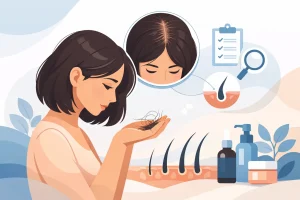
Explore postpartum hair loss solutions that address shedding, scalp health and confidence, with personalised support for healthier regrowth after birth.
A shower full of hair, a widening parting, and the feeling that your ponytail has suddenly halved can be deeply unsettling after having a baby. Postpartum hair loss solutions should offer more than reassurance alone: they should help you understand what is happening, protect the hair you have, and identify when personalised support could make a meaningful difference.
For many women, shedding begins just as life with a newborn becomes most demanding. You may be sleep-deprived, recovering physically and adjusting to a new routine, so it is understandable that visible hair changes can affect confidence. The good news is that postpartum shedding is often temporary. The right next step depends on your shedding pattern, scalp health, medical history and whether an underlying cause is also involved.
Why hair loss happens after pregnancy
During pregnancy, higher levels of oestrogen keep more hairs in their growth phase. This is why many women notice fuller, shinier hair while pregnant. After birth, hormone levels naturally fall. Hairs that were held in the growth phase shift into the resting phase and shed together several weeks or months later.
This process is known as postpartum telogen effluvium. It commonly becomes noticeable between two and four months after delivery, although the timing and severity vary. It can look dramatic because the shedding is diffuse: hair may come away while washing, brushing or simply running your fingers through it.
For many women, shedding settles gradually as the hair cycle normalises. However, pregnancy can also reveal a tendency towards female-pattern hair thinning that was previously less obvious. Low iron stores, thyroid changes, restrictive eating, significant stress, illness, heavy blood loss during delivery and scalp inflammation can all influence recovery. That is why a one-size-fits-all answer is rarely helpful.
Postpartum hair loss solutions begin with the right assessment
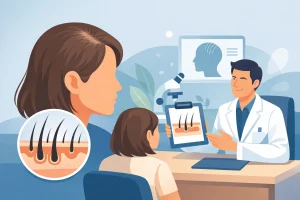
Before choosing supplements, serums or clinical treatments, it helps to establish whether your shedding follows a typical postpartum pattern. A specialist consultation focuses on the details that are easily missed when you are trying to manage everything else.
This may include looking at when shedding began, whether density has changed at the temples or crown, your family history, previous episodes of hair loss, dietary intake, medication and any symptoms such as fatigue, weight changes or an irritated scalp. A close scalp and hair assessment can distinguish diffuse shedding from breakage, scalp conditions and patterned thinning. Where appropriate, blood tests arranged through your doctor may help investigate iron status, thyroid function and other relevant factors.
This clarity matters. Treating temporary shedding as though it were permanent pattern loss can create unnecessary worry. Equally, assuming every change is simply hormonal can delay help when there is a correctable contributor.
Protecting your hair while shedding is active
Hair that is due to shed cannot always be retained, and aggressive attempts to stop every strand falling can cause more stress. The aim is to minimise breakage, maintain a healthy scalp environment and support the strongest possible regrowth.
Choose gentle cleansing that suits your scalp rather than avoiding washing out of fear. Washing does not create the shedding; it simply releases hairs that have already completed their cycle. If your scalp feels oily, flaky, itchy or tender, leaving it unaddressed may make hair care more difficult and affect the comfort of new growth.
Be kind to fragile lengths. Tight buns, extensions, repeated heat styling, chemical processing and vigorous brushing can place added tension on hair that already feels finer. Loose styles, a wide-tooth comb and heat protection are simple but worthwhile changes. If you need to tie your hair back often, vary the position and avoid pulling the same area each day.
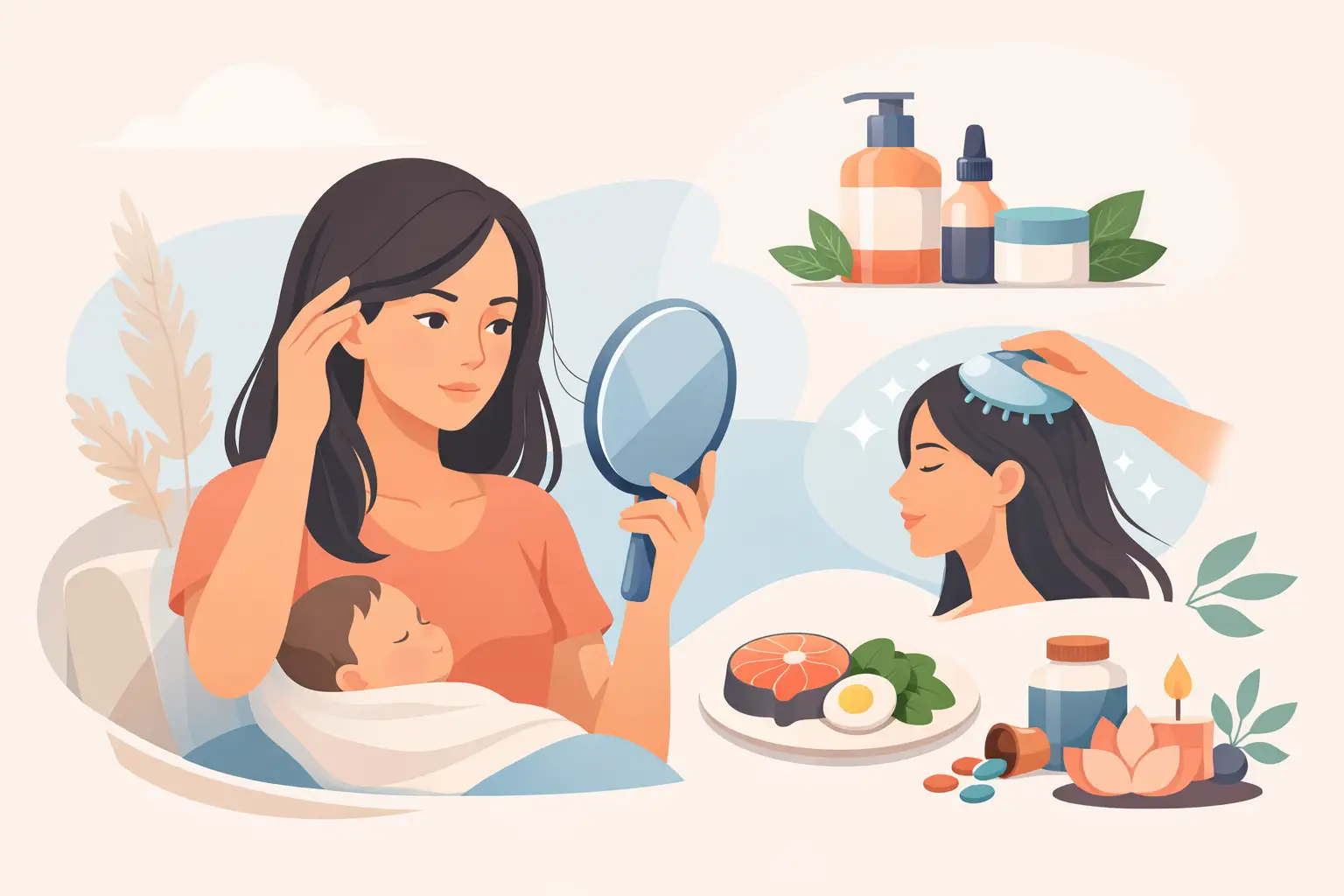
Nutrition also deserves practical attention, not perfection. Postnatal life is busy, and many women find regular meals difficult at first. Prioritise adequate protein, iron-rich foods, vegetables, wholegrains and healthy fats where possible. Supplements should be selected with care, particularly during breastfeeding. More is not always better, and taking high-dose vitamins without a confirmed need can be unhelpful or inappropriate.
When do clinical treatments make sense?
Time is a genuine part of recovery for typical postpartum shedding. Yet waiting without a plan can feel frustrating when your parting looks broader or you can see more scalp in photographs. Clinical support may be valuable where shedding is prolonged, density is not returning as expected, or an assessment indicates female-pattern thinning or a scalp concern alongside postpartum shedding.
A personalised programme may include scalp-focused care, targeted topical options and a plan to address any identified nutritional or medical factors. The safest and most suitable approach depends on whether you are breastfeeding, your health history and your hair-loss diagnosis. A responsible practitioner will never treat pregnancy or breastfeeding as an afterthought.
PRP therapy may be considered for suitable clients with thinning or reduced density. It uses a concentrated portion of your own blood, prepared and applied to the scalp to support follicle activity. It is not a quick fix, and it is not necessary for every new mother. Results vary according to the cause and stage of hair loss, and treatment planning should include realistic expectations, timing and maintenance rather than promises of instant regrowth.
At Dubai Hair Doctor, consultations are designed to replace guesswork with an individual, scalp-health-led plan. For women who have tried numerous products without knowing why their hair is changing, that level of assessment can be a reassuring first step.
Signs your hair loss needs prompt review
Postpartum shedding is common, but do not feel you must simply tolerate every symptom. Seek professional advice sooner if you notice any of the following:
- Sudden, clearly defined bald patches rather than general shedding.
- Burning, soreness, scaling, significant itching or persistent dandruff.
- Hair loss continuing beyond a year, or worsening after the first several months.
- A progressively wider central parting, recession around the temples or strong family history of thinning.
- Marked tiredness, palpitations, unexplained weight changes or other symptoms that may need medical assessment.
These signs do not automatically mean a serious problem, but they do justify a proper review. The earlier the cause is identified, the more confidently you can make decisions about care.
Give regrowth the time and support it deserves
New growth often first appears as short, fine hairs around the hairline or parting. This can be encouraging, although it may take longer for those hairs to gain length and create visible fullness. Hair grows slowly, so progress is better judged over months than week by week.
Photographs taken in the same lighting and with the same parting every eight to twelve weeks can be more reliable than daily mirror checks. They provide an objective record of density and can help a specialist adapt your plan if results are not progressing as expected.
Try not to let social media comparisons set the pace for your recovery. Some women experience a brief, mild shedding phase, while others have more pronounced loss or have underlying thinning brought to the surface by hormonal change. Neither experience is a reflection of how well you are coping as a mother.
Your hair deserves the same considered attention as the rest of your postnatal recovery. With an accurate diagnosis, gentle daily care and specialist guidance where needed, you can move forward with a plan that supports healthier hair and restores confidence at your own pace.