
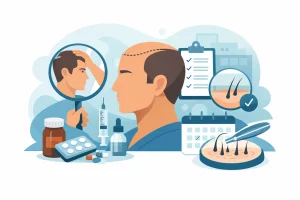
How to Prepare for Hair Transplant Surgery
Learn how to prepare for hair transplant surgery with clear advice on assessments, medicines, scalp care, recovery planning and realistic expectations.

Seeing more hair in your brush than usual can change the way you feel about getting ready, styling your hair, or even looking in the mirror. If you are asking how to support hair regrowth, the first thing to know is that progress usually starts with clarity, not guesswork. Hair regrowth is possible in many cases, but the right approach depends on why the hair is shedding, thinning, or failing to grow as it should.
For women, hair loss is rarely just cosmetic. It can affect confidence, routine, and emotional well-being in ways that are difficult to explain to anyone who has not experienced it. That is why a science-backed, individualized plan matters. Hair regrowth is not about chasing trends. It is about understanding the scalp, the hair cycle, and the internal or external triggers that may be disrupting both.
Hair grows in cycles. At any given time, some hairs are actively growing, some are resting, and some are shedding. When this rhythm is disrupted, thinning becomes more noticeable. In women, common triggers include hormonal shifts, iron deficiency, thyroid imbalance, stress, postpartum changes, scalp inflammation, traction from tight hairstyles, and genetic pattern thinning.
This is why one-size-fits-all advice often falls short. A supplement that helps one person may do very little for another. A shampoo can improve scalp comfort, but it will not correct a hormonal issue. Even advanced treatments work best when they are matched to the real cause of the problem.
If shedding is sudden, patchy, or accompanied by itching, scaling, pain, or widening of the part line, it is worth treating that as a medical concern rather than a beauty concern. Early action often gives you more treatment options and better outcomes.
A healthy scalp creates a better environment for healthy hair. That sounds simple, but it is often overlooked. When the scalp is inflamed, congested with buildup, excessively oily, or overly dry, follicles may not function at their best.
Supporting regrowth often starts with improving the scalp environment. That may involve cleansing more appropriately for your scalp type, reducing product buildup, treating dandruff or seborrheic dermatitis, and addressing sensitivity or inflammation. Women with persistent itching, tenderness, flakes, or acne-like bumps on the scalp should not ignore those signs. Scalp discomfort is not normal, and it can point to an issue that needs proper assessment.
There is also a balance to strike. Overwashing with harsh products can irritate the scalp, while underwashing can allow oil, sweat, and dead skin to accumulate. The best routine is usually the one that keeps the scalp consistently clean and calm without stripping it.
Gentle care supports regrowth better than aggressive handling. Tight ponytails, frequent heat styling, rough towel drying, and repeated bleaching can all add stress to already vulnerable hair. These habits do not usually cause follicle-level hair loss on their own, but they can worsen breakage and make thinning look more severe.
A better routine is practical. Use a shampoo that suits your scalp condition, condition the mid-lengths and ends, minimize high-heat styling, and avoid tension-heavy hairstyles if your hairline is already fragile. If you wear extensions or coverings regularly, make sure they are not creating traction at the roots.
Hair is not essential tissue in the body, which means the body will not prioritize it when nutrients are low. Iron, vitamin D, protein intake, zinc, and other nutritional factors can all influence hair growth. Crash dieting, restrictive eating, and rapid weight loss are especially common triggers for diffuse shedding.
This does not mean everyone with thinning hair needs a shelf full of supplements. In fact, taking the wrong supplements without testing can be unhelpful or even counterproductive. Supporting hair regrowth properly means checking whether there is a deficiency, a hormone issue, or another internal factor that needs targeted correction.
Stress also deserves an honest place in this conversation. Emotional stress can push more hairs into the shedding phase, often with a delay of several weeks or months. That is one reason hair loss can feel confusing. The trigger and the shedding do not always happen at the same time. Managing stress will not solve every case, but it can be a meaningful part of recovery, especially when paired with medical guidance.
Treatment options vary depending on diagnosis, severity, and how long the thinning has been present. Topical medications may help in some cases, especially for pattern hair loss. Scalp therapies can improve the condition of the scalp and support healthier follicles. PRP therapy is also a popular option for women seeking a non-surgical, regenerative treatment approach.
PRP uses your own platelets, prepared in a concentrated form and introduced into the scalp to support follicle activity. It is not a miracle fix, and results are not instant, but for the right candidate it can be a valuable part of a broader plan. It tends to work best when follicles are weakened rather than fully inactive, which is one reason timing matters.
Some women are also good candidates for prescription-led treatment plans, especially when female pattern hair loss or hormone-driven thinning is involved. Others may need treatment for scalp inflammation or recovery support after hair transplant procedures. The point is not to choose the most talked-about option. It is to choose the most appropriate one.
The most effective approach is usually layered. It may include scalp treatment, nutritional correction, medication, regenerative therapy, and changes to your hair care habits. What it should not include is months of trying random products with no diagnosis and no way to track progress.
Hair grows slowly, so realistic expectations are important. Most evidence-based treatments need several months before improvement becomes visible. In the early stages, success may look like reduced shedding, less scalp visibility, or better hair texture before obvious density returns. That can still be meaningful progress.
Photos, scalp analysis, and regular review are useful because they make change easier to measure. Hair loss can feel very emotional, and many women either lose hope too early or assume nothing is working when subtle improvement is already happening.
If hair thinning has lasted more than a few months, if your part line is widening, or if you have tried self-treatment without success, specialist assessment is the most efficient next step. Female hair loss is nuanced. A proper consultation can help distinguish between temporary shedding, chronic shedding, androgenetic thinning, traction damage, and scalp disorders that may look similar at first glance.
This is where expert trichology care becomes especially valuable. A specialist can examine the scalp closely, review your health history, identify likely triggers, and build a plan that fits your stage of hair loss, your lifestyle, and your goals. For many women, that tailored guidance also brings relief. Having a clear explanation often reduces the anxiety that comes from not knowing what is happening.
At Dubai Hair Doctor, this personalized model of care is central to the treatment process. Women are not simply handed a product and sent away. They are guided through a plan built around diagnosis, scalp health, evidence-based treatment, and long-term support.
Hair recovery is not always linear. Some women respond quickly. Others need patience, adjustments, and a longer timeline. That does not mean treatment is failing. It often means the hair cycle needs time to respond.
The emotional impact of hair loss is real, and it should not be minimized. Feeling less confident, avoiding certain hairstyles, or becoming preoccupied with scalp visibility are common experiences. Compassion matters here just as much as clinical accuracy. The best care combines both.
If you are wondering how to support hair regrowth, start by resisting the urge to self-diagnose based on social media or product marketing. Look at the bigger picture – scalp health, internal health, lifestyle triggers, and clinical treatment options that fit your specific pattern of hair loss. Regrowth is rarely about one product or one appointment. It is about a plan that treats the cause, supports the scalp, and gives your hair the best possible chance to recover.
Your hair may not need more hype. It may simply need the right diagnosis, the right timing, and the right support.
Learn how to prepare for hair transplant surgery with clear advice on assessments, medicines, scalp care, recovery planning and realistic expectations.
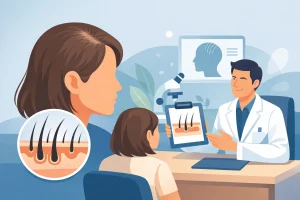
Hair thinning can have many causes. Learn how a specialist scalp assessment identifies triggers and builds a clear plan for healthier, fuller-looking hair.
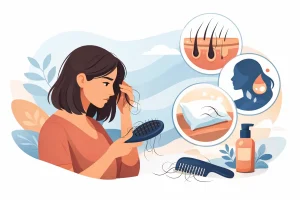
What causes female hair loss? Learn about hormones, stress, nutrition, scalp health and medical factors, plus when personalised expert care can help you.
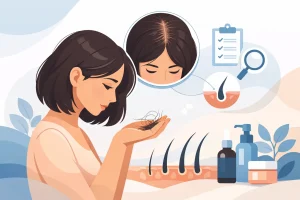
Female hair loss treatment starts with a specialist assessment, scalp health and a personal plan for stronger, fuller-looking hair and renewed confidence.