
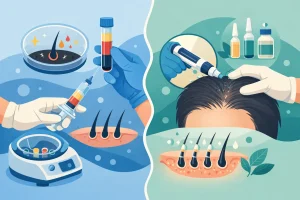
PRP vs Mesotherapy Hair: Which Is Better?
PRP vs mesotherapy hair treatments – compare results, downtime, candidacy, and costs to choose the right option for thinning hair and scalp health.
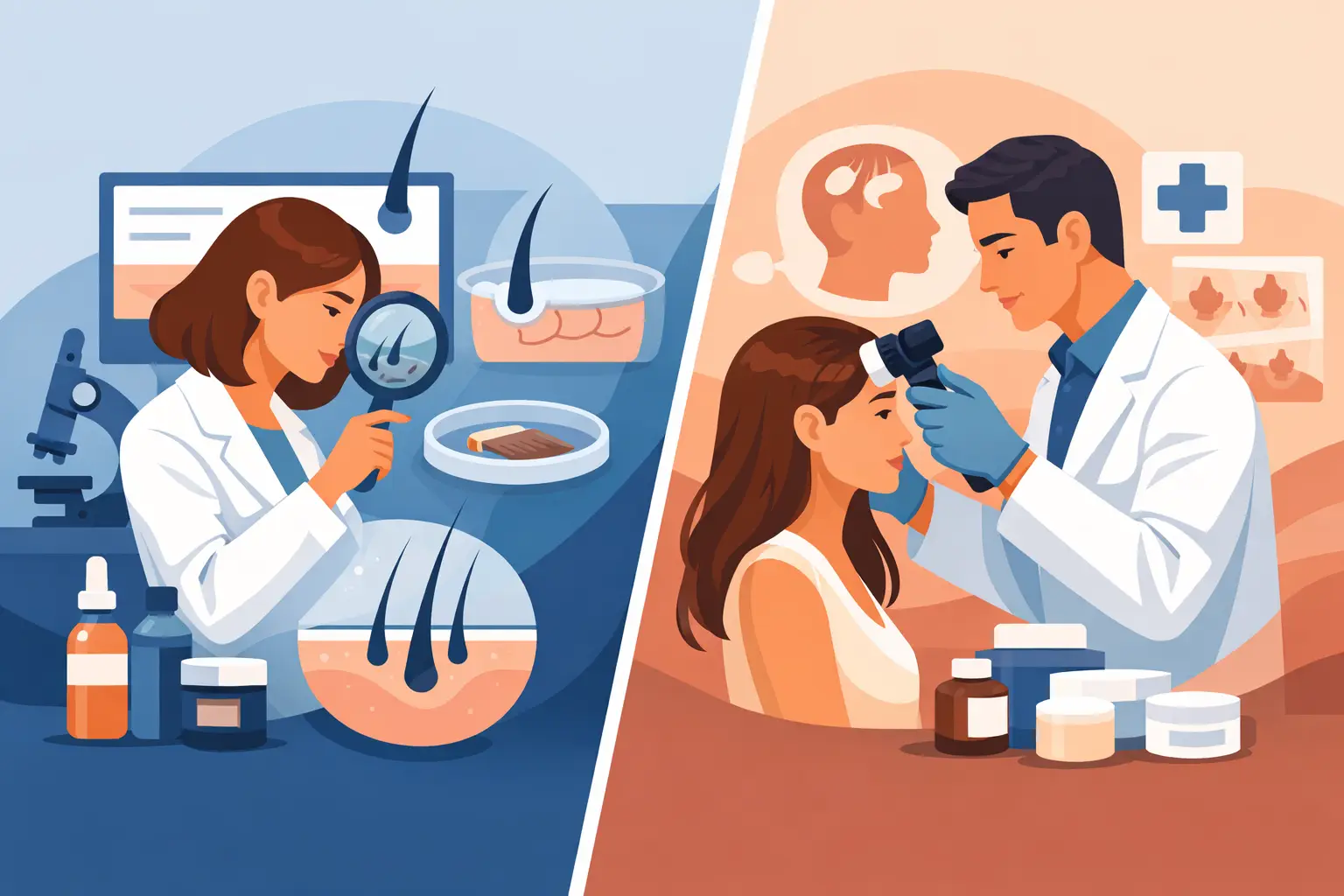
If you are searching trichologist vs dermatologist hair loss, you are probably not looking for theory. You want to know who can actually help, what kind of help to expect, and whether you are about to waste more time on the wrong appointment.
That question matters because hair loss is rarely just about hair. For many women, it affects confidence, daily routines, social comfort, and how they feel when they look in the mirror. The right specialist can move you from guesswork to a clear plan. The wrong one can leave you with generic advice, a bag of products, and no real progress.
A trichologist focuses specifically on the hair and scalp. Their work centers on shedding, thinning, breakage, scalp irritation, dandruff, buildup, inflammation, and patterns of hair loss. A skilled trichologist looks closely at how the scalp environment, hair cycle, styling habits, stress, nutrition, hormones, and lifestyle may be contributing to what you are seeing.
A dermatologist is a medical doctor who treats skin, hair, and nails. Because the scalp is skin, dermatologists are qualified to assess hair loss, especially when there may be an underlying medical or inflammatory condition. They can diagnose skin diseases, order medical tests, prescribe medication, and perform medical procedures when needed.
So the short answer is this: both can help, but they help in different ways.
A dermatologist tends to be the right starting point when hair loss may be tied to a medical issue that needs diagnosis or prescription treatment. A trichologist tends to be especially valuable when the problem is ongoing, complex, scalp-related, female-pattern thinning, stress shedding, or when you need a more detailed and personalized approach to long-term hair and scalp restoration.
If your hair loss is sudden, severe, painful, patchy, or linked with other skin symptoms, a dermatologist should be high on your list. The same applies if you have scalp sores, significant redness, scarring, signs of infection, or hair loss alongside hormonal or autoimmune concerns.
Dermatologists are trained to rule out conditions such as alopecia areata, scalp psoriasis, seborrheic dermatitis, fungal infections, lupus-related hair loss, and scarring alopecias. These are not issues to self-diagnose. They can look similar at first but require very different treatment.
A dermatologist may also be necessary if you need blood work reviewed, biopsies considered, or prescription medications discussed. For some women, especially those with clear medical triggers, this is exactly the level of care required.
That said, dermatology appointments can sometimes be brief and medically narrow, depending on the setting. If you are told to simply monitor the shedding, use one standard treatment, or come back in six months without much explanation, you may leave with valid medical information but not the full support you were hoping for.
A trichologist is often the better fit when your concern is persistent thinning, increased shedding, scalp discomfort, or hair that seems weaker over time without a straightforward diagnosis. This is especially true for women whose hair loss is influenced by several factors at once – stress, nutritional gaps, postpartum changes, perimenopause, heat styling, tight hairstyles, scalp imbalance, or previous chemical damage.
Trichology care is usually more focused on patterns, behavior, and scalp health over time. Rather than only labeling the condition, a trichologist often examines why your follicles may be underperforming and what needs to change in your routine, scalp environment, and treatment plan to improve outcomes.
This can be particularly valuable for female hair loss, where the issue is not always dramatic bald patches or obvious disease. Many women notice a widening part, reduced density at the crown, excessive shedding in the shower, or hair that no longer grows the way it used to. These cases deserve more than a one-size-fits-all answer.
A strong trichology consultation should look beyond the hair strands themselves. It should assess the scalp, discuss medical history, identify likely triggers, and create a realistic plan that matches your age, symptoms, goals, and timeline.
This is where the trichologist vs dermatologist hair loss debate can get oversimplified. Many women do not need to choose one forever. They may need one first, then the other, or both as part of a coordinated approach.
For example, a woman with diffuse thinning may need a dermatologist to rule out thyroid dysfunction, anemia, or inflammatory scalp disease. But once urgent medical concerns are addressed, she may still need a trichologist to manage chronic shedding, improve scalp health, support regrowth, and build a sustainable treatment strategy.
Another woman may already know she has female pattern hair loss but feels stuck because her hair still looks thinner despite trying standard treatments. In that case, trichology support can add the layer that is often missing – close scalp assessment, progress tracking, in-clinic therapies, and tailored guidance rather than generalized advice.
A dermatologist can diagnose medical scalp and skin conditions, prescribe medications, and manage disease-based causes of hair loss. That matters when inflammation, infection, autoimmune activity, or hormone-related pathology is involved.
A trichologist can provide detailed scalp and hair analysis, identify contributing lifestyle and hair-care factors, and build a more personalized restoration plan around scalp therapy, non-surgical support, treatment consistency, and follicle health.
The limitation is not about which profession is better overall. It is about scope.
A trichologist is not a replacement for urgent medical care. If you may have a disease process, you need medical oversight. A dermatologist, on the other hand, may not always provide the ongoing, hair-specific coaching and tailored scalp support that women with long-term thinning often benefit from.
Start with your symptoms, not the job title. If you have sudden bald patches, pain, bleeding, severe itching, or rapid shedding after a medical event, begin with a dermatologist. If you have gradual thinning, chronic shedding, scalp imbalance, or a frustrating history of trying products without clarity, a trichologist may be the more useful first step.
Then look at the quality of the practice itself. Experience matters. So does whether they regularly treat female hair loss, whether the consultation is thorough, and whether the plan feels individualized or generic.
Ask practical questions. Will they examine your scalp closely? Will they explain likely causes in plain language? Do they offer only a diagnosis, or also a structured treatment path? Will they track progress over time? If the answer to those questions is vague, keep looking.
For many women, trust is just as important as credentials. Hair loss can feel deeply personal. You should not have to minimize your concern or feel rushed through the process. The right specialist takes both the clinical issue and the emotional impact seriously.
Female hair loss is often dismissed for too long. Many women are told their blood work is normal, that stress is probably the cause, or that thinning is just part of aging. Sometimes those explanations contain part of the truth. But they are not enough on their own.
Women often experience hair loss differently than men. The pattern is usually more diffuse, the triggers may be layered, and the emotional burden can be heavier. A specialist who understands female hair loss is more likely to recognize subtle signs early and recommend realistic treatment options before the problem progresses further.
That is one reason clinics focused on trichology and restoration can be so helpful. At Dubai Hair Doctor, for example, the emphasis is not only on identifying what is happening now, but on creating a plan that supports scalp health, visible improvement, and confidence over time.
If you suspect a medical scalp condition, see a dermatologist first. If your concern is thinning, shedding, scalp health, or a lack of progress despite trying standard solutions, a trichologist may be the smarter first appointment.
If your case is complicated, the best answer may be both.
The goal is not to collect opinions. It is to get a clear diagnosis where needed, then move into the kind of personalized care that gives your hair the best chance to recover. Hair loss responds best when the right problem is identified early and treated consistently.
If your hair has been sending you warning signs for months, do not wait for them to become harder to reverse. The most helpful next step is usually not another product. It is the right pair of expert eyes on your scalp, your history, and your future results.
PRP vs mesotherapy hair treatments – compare results, downtime, candidacy, and costs to choose the right option for thinning hair and scalp health.
Hair transplant vs PRP for women – compare results, downtime, cost, and candidacy to choose the right hair restoration treatment with expert guidance.

Iron deficiency hair loss female concerns are common. Learn signs, causes, testing, and treatment options to support fuller, healthier hair.
Stress related hair loss in women can be temporary, but it needs the right diagnosis. Learn causes, signs, and treatment options.