
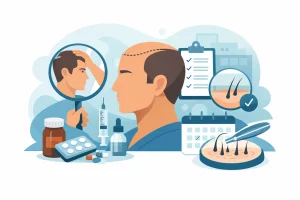
How to Prepare for Hair Transplant Surgery
Learn how to prepare for hair transplant surgery with clear advice on assessments, medicines, scalp care, recovery planning and realistic expectations.
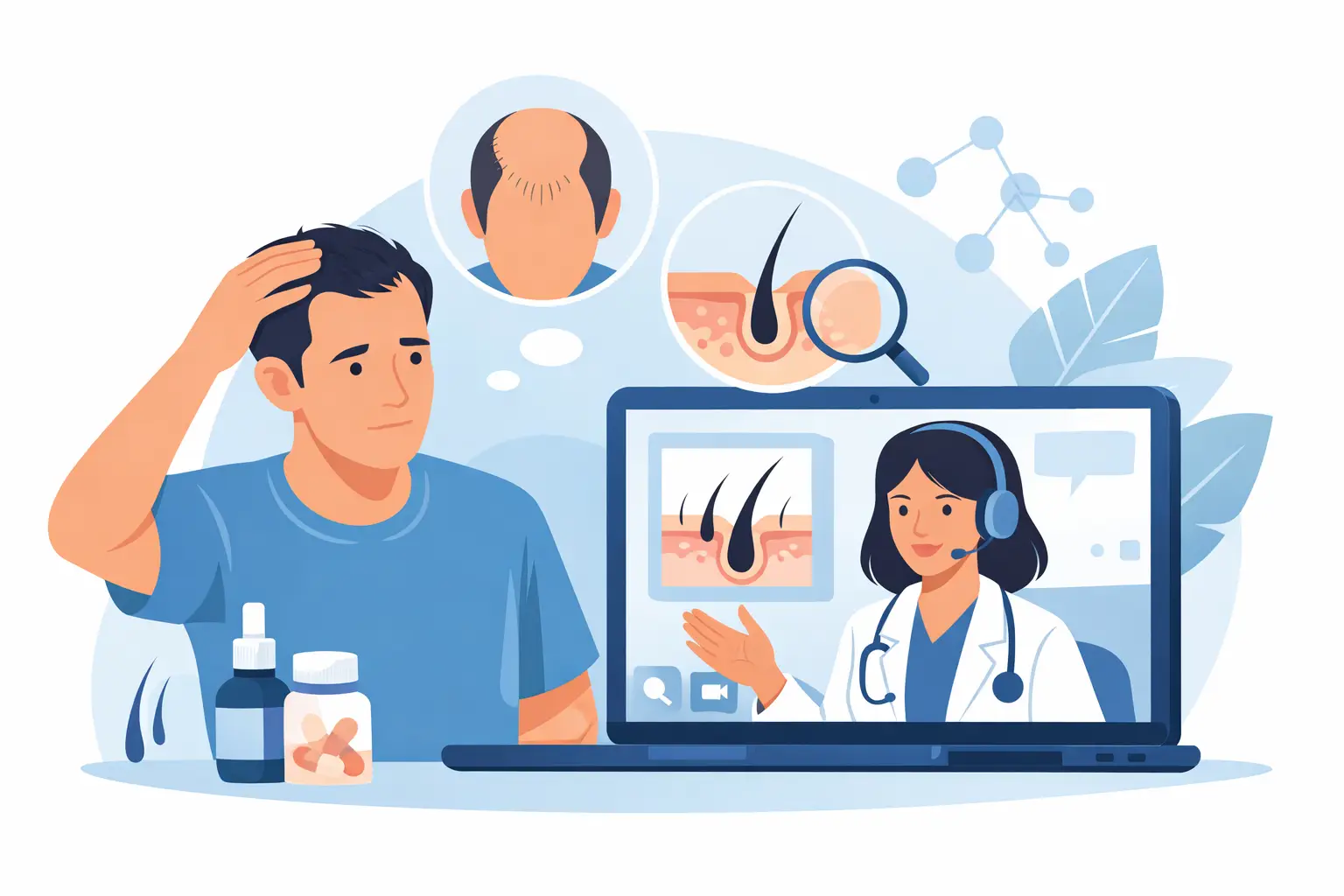
Hair loss rarely starts as a medical problem in someone’s mind. It starts at the mirror, under bright bathroom lighting, or in a photo where your part suddenly looks wider than it did a few months ago. An online hair loss consultation is often the first step women take when they want real answers without guessing, self-diagnosing, or wasting more time on products that promise everything and explain nothing.
For many women, that first step matters more than it seems. Hair thinning can feel deeply personal, and not everyone is ready to walk into a clinic before they understand what might be happening. Online access makes expert guidance more private, more convenient, and often much less overwhelming. But convenience alone is not enough. The real question is whether a virtual consultation can lead to meaningful diagnosis and results.
A good online consultation is not a casual chat or a generic recommendation based on age. It should be a structured clinical assessment focused on your symptoms, history, scalp concerns, lifestyle factors, and pattern of shedding or thinning. When done properly, it helps identify whether the issue may be related to hormonal shifts, stress, nutritional deficiencies, postpartum changes, scalp inflammation, traction, genetics, or another underlying factor.
This is especially important for women because female hair loss is often more complex than people expect. It does not always follow the obvious receding pattern many associate with male hair loss. Diffuse thinning, widening of the part, increased shedding, scalp sensitivity, and texture changes can all point to different causes. A specialist in female hair and scalp health will look at these nuances instead of treating every case as the same.
An online consultation can also help determine urgency. Some forms of hair loss develop gradually and respond well to consistent treatment over time. Others need faster intervention to reduce ongoing shedding or inflammation. If there are signs that an in-person scalp examination, blood work, or medical referral is needed, that should be identified early rather than delayed.
Most women are pleasantly surprised by how detailed the process should be. You may be asked to share recent photos of your scalp from different angles, describe how long the problem has been happening, and explain whether the hair loss is constant, sudden, patchy, or linked to a life event. Questions about menstrual history, pregnancy, menopause, illness, medication changes, stress, diet, and styling habits are often relevant because hair reflects internal and external influences.
A specialist may also ask about scalp symptoms such as itching, flaking, pain, oiliness, or tenderness. That matters because the scalp environment plays a major role in healthy growth. In some cases, women focus only on the hair strands while the underlying issue is scalp inflammation or imbalance.
The most valuable consultations go beyond identifying a likely cause. They explain what that cause means, what can realistically improve, how long results may take, and whether treatment should focus on reducing shedding, improving scalp health, stimulating regrowth, or preserving existing density. Honest guidance matters here. Not every case can be solved quickly, and not every patient is a candidate for the same plan.
Virtual care works particularly well for women who need specialist input but want privacy and efficiency. If you live in a busy city, travel frequently, or feel hesitant about discussing hair loss face to face before understanding your options, online support can remove a major barrier.
It can also be a smart starting point if you have early signs of thinning and want to act before the problem becomes more advanced. Many women wait too long because they hope the shedding will settle on its own. Sometimes it does. Often it does not. An early assessment can help you separate temporary hair changes from patterns that need treatment.
Online consultations are also useful for follow-up care. Once a diagnosis or treatment direction has been established, virtual reviews make it easier to track progress, adjust home care, assess shedding changes, and stay consistent. Long-term hair restoration is rarely about one appointment. It is about continuity.
Online consultations are valuable, but they do have limits. Some cases need direct scalp analysis, trichology imaging, blood testing, or hands-on assessment to confirm what is happening. If your hair loss is sudden, severe, painful, patchy, or associated with visible scalp changes, in-person evaluation may be the better next step.
The same applies if you have already tried treatment without improvement, or if the presentation is unclear from photos alone. Virtual care can point the process in the right direction, but it should never pretend to replace every part of specialist assessment. The right provider will be transparent about that.
This balance is important. A trustworthy clinic does not oversell convenience. It uses convenience to make expert care more accessible while still recommending in-person support when needed.
Time-saving matters, but most women are not seeking an online consultation because they are busy alone. They are seeking reassurance, clarity, and a plan they can trust. Hair loss often creates a cycle of panic buying, conflicting advice, and emotional fatigue. One friend suggests supplements. Another suggests oils. Social media suggests ten different causes in ten minutes.
What breaks that cycle is a specialist who can say, based on your symptoms and history, this is the most likely explanation, this is what we need to rule out, and this is the most sensible next step.
That kind of clarity protects more than your hair. It protects your confidence, your time, and your ability to make decisions from a place of knowledge instead of fear.
Not every online service offering hair advice is built the same way. Some are product funnels disguised as clinical care. Others rely on generic questionnaires and broad recommendations. If you are investing in expert support, the consultation should feel personal, evidence-based, and specific to female hair loss.
Look for signs that the provider understands different forms of shedding and thinning in women, asks thoughtful questions about medical and lifestyle factors, and sets realistic expectations. If every answer leads immediately to a single product or one standard treatment, that is a red flag.
A specialist approach should reflect the fact that women’s hair loss is influenced by multiple systems at once. Hormones, nutrition, scalp health, stress response, genetics, inflammation, and age can all intersect. Good care accounts for those layers rather than reducing the issue to one simple fix.
There is also an emotional reason online consultations matter. Many women feel embarrassed discussing hair thinning, even though it is extremely common. They may worry they are overreacting, or they may have been dismissed before and told it is just stress. A private consultation can make it easier to speak openly, ask better questions, and seek help earlier.
That early support can be powerful. Hair concerns are not only cosmetic. They affect how women style their hair, how they show up socially, how they feel at work, and how they see themselves in daily life. Expert guidance that combines medical credibility with empathy can make the process feel less isolating.
This is where a clinic with genuine female hair loss expertise stands apart. At Dubai Hair Doctor, the focus is not on quick cosmetic cover-ups but on tailored, science-backed care that respects both the physical and emotional side of hair loss.
For many women, yes – if it is done by the right specialist and used in the right way. It is worth it when it gives you a clearer understanding of what may be causing the problem, what treatment path makes sense, and whether you need in-person testing or therapy. It is worth it when it saves you months of trial and error. It is worth it when it replaces confusion with a plan.
It may not be enough on its own for every case, and honest care should say that clearly. But as a first step, it can be one of the most practical and confidence-building decisions you make.
If your hair feels different, thinner, or harder to trust lately, waiting for certainty often delays progress. A thoughtful consultation does not promise miracles. It gives you something more useful – a professional starting point, shaped around you.
Learn how to prepare for hair transplant surgery with clear advice on assessments, medicines, scalp care, recovery planning and realistic expectations.
Hair thinning can have many causes. Learn how a specialist scalp assessment identifies triggers and builds a clear plan for healthier, fuller-looking hair.
What causes female hair loss? Learn about hormones, stress, nutrition, scalp health and medical factors, plus when personalised expert care can help you.
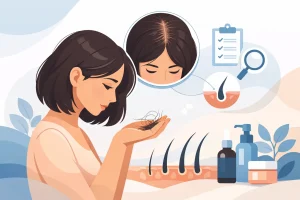
Female hair loss treatment starts with a specialist assessment, scalp health and a personal plan for stronger, fuller-looking hair and renewed confidence.