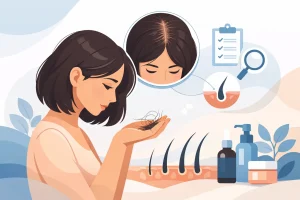
What is the best female hair loss treatment? Personalised diagnosis, scalp care and proven options can help restore density and confidence over time.
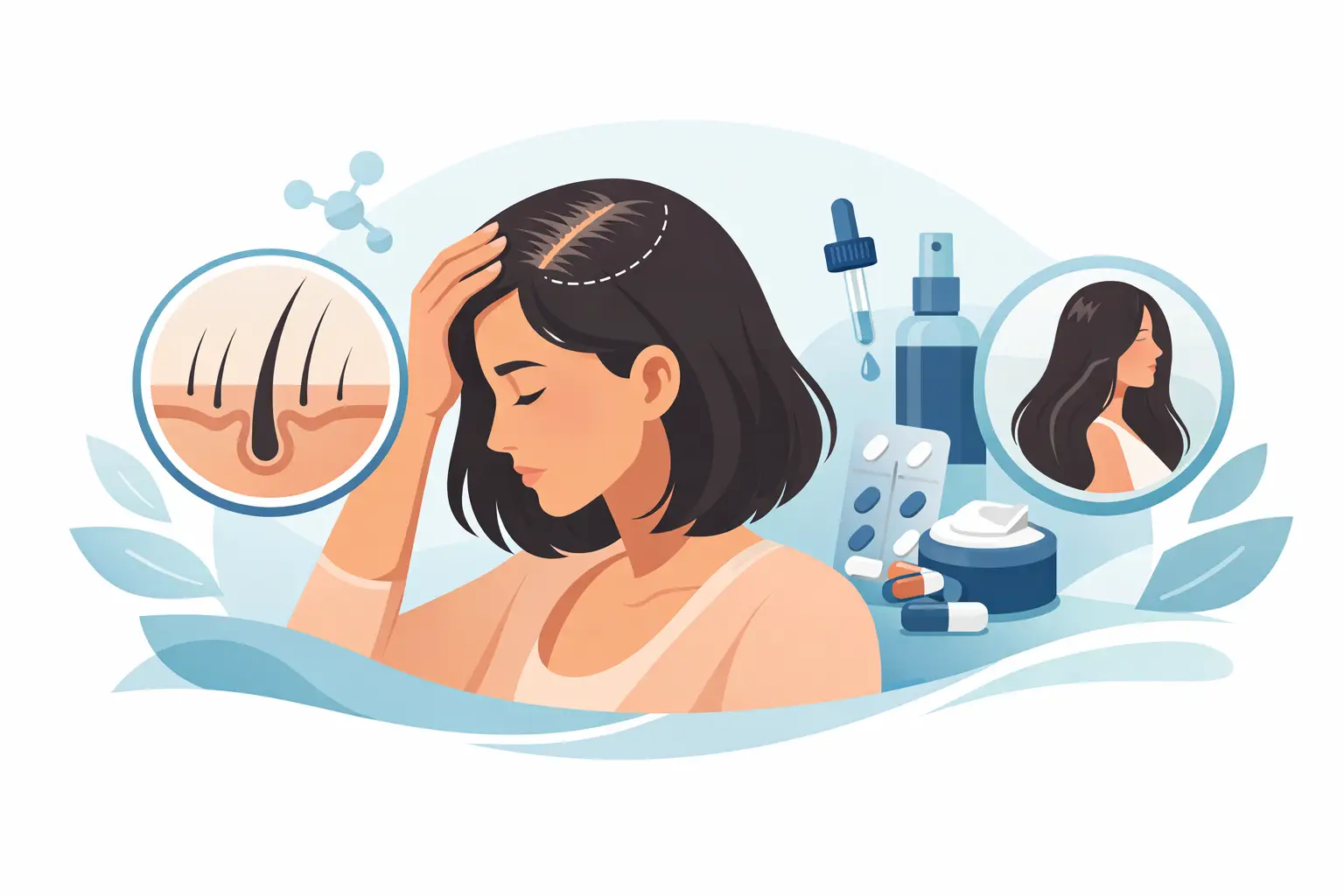
A widening parting, more hair around the shower drain, or a ponytail that no longer feels as full can affect far more than appearance. It can make getting ready feel stressful and quietly undermine confidence. So, what is the best female hair loss treatment? The honest answer is not one product, procedure or supplement. The most effective treatment is the one matched to the cause of your shedding, the condition of your scalp and your stage of hair loss.
For many women, the hardest part is not finding advice. It is separating credible guidance from promises that a shampoo, oil or vitamin can reverse every form of thinning. Hair loss deserves a proper assessment, especially when it is persistent, sudden or distressing.
Why there is no single best female hair loss treatment
Female hair loss has several possible causes, and they can overlap. Female-pattern hair loss is common and often presents as gradual thinning through the top of the scalp or a broader central parting. It may be influenced by genetics, changing hormones and sensitivity of the follicles to androgens.
Other women experience diffuse shedding after illness, surgery, significant stress, rapid weight loss or a period of hormonal change such as childbirth or menopause. This is often known as telogen effluvium. It can feel alarming, but the treatment focus is different: identifying the trigger, supporting recovery and monitoring whether shedding settles as the growth cycle normalises.
Low iron stores, thyroid concerns, vitamin deficiencies, restrictive diets, inflammatory scalp conditions and some medications can also contribute. Tight styling, extensions and repeated chemical or heat damage may create traction or breakage that looks like hair loss. This is why a treatment that helped a friend, influencer or family member may not be the right choice for you.
A specialist consultation replaces guesswork with a clear plan. It should consider your medical and family history, lifestyle, hormone-related changes, pattern of loss and scalp condition. Where appropriate, further investigations may be recommended. The goal is to protect existing follicles, address contributing factors and create the best conditions for stronger, healthier-looking growth.
The treatments that may form part of a personalised plan
Medical-grade topical treatment
Topical minoxidil is one of the most established options for female-pattern hair loss. It works by helping keep follicles in their active growth phase for longer. It is not an overnight solution: visible improvement usually takes several months, and temporary increased shedding can occur early in treatment as the hair cycle shifts.
Consistency matters. Stopping treatment can mean losing the benefit that has been maintained, so it is generally viewed as a long-term management option rather than a short course. It may not suit everyone, particularly during pregnancy or breastfeeding, and scalp sensitivity should be taken seriously. A specialist can advise on the appropriate formulation, use and expectations.
PRP therapy for hair thinning
Platelet-Rich Plasma, or PRP, uses a concentrated portion of your own blood containing growth factors. After preparation, it is carefully administered into areas of thinning to support follicle activity and scalp health. For suitable candidates, PRP can be a valuable part of a programme for early to moderate thinning, particularly when combined with a consistent home-care and medical plan.
PRP is not a miracle cure, and it cannot recreate follicles that are no longer active. Results vary with the cause and extent of loss, but many clients value it as a non-surgical treatment that supports density, hair calibre and long-term maintenance. A course of sessions is usually advised, followed by review and maintenance where needed.
Prescription options when clinically appropriate
Some women may benefit from prescription medication aimed at hormonal influences on hair loss. These options require a careful clinical discussion because suitability depends on age, medical history, menstrual status, contraception, blood pressure and pregnancy plans. They should never be chosen from social media recommendations or taken without professional oversight.
The right prescription approach can be particularly helpful where female-pattern thinning is progressing, but it works best as part of an individual strategy. Regular review allows treatment to be adjusted according to tolerance, progress and changing circumstances.
Scalp health and targeted home care
A healthy scalp does not guarantee thick hair, but irritation, excess oil, scaling, inflammation and product build-up can make hair shedding and breakage harder to manage. Scalp-led care may include a tailored cleansing routine, treatments for dandruff or inflammation, and carefully selected products that support the hair shaft without overloading the scalp.
This is also where many women benefit from realistic guidance. Expensive oils and cosmetic serums may improve shine or reduce the feeling of dryness, but they are not a substitute for treatment when follicles are miniaturising or shedding is driven by an internal trigger. Good home care supports clinical treatment; it rarely replaces it.
Nutrition and lifestyle support
Hair is sensitive to nutritional shortfalls and physical stress. A balanced diet with adequate protein, iron and essential nutrients supports normal hair growth, but supplements should not be treated as a universal answer. Taking high-dose supplements without evidence of a deficiency can be unnecessary and, in some cases, unhelpful.
Sleep, stress management and avoiding crash diets also matter. These are not simplistic answers to a complex concern. They are practical ways to reduce avoidable pressure on the hair growth cycle while the underlying cause is assessed and treated.
When hair transplantation may be considered
Hair transplantation can be an appropriate option for some women with stable, established hair loss and a suitable donor area. It is not usually the first response to active shedding or poorly controlled scalp inflammation. The existing hair must be assessed carefully, because transplanted hair needs to blend naturally with surrounding density over time.
Pre- and post-operative scalp care is essential. A strong result depends not only on the procedure itself, but also on protecting native hair and maintaining scalp health afterwards. For many women, non-surgical treatment remains important even when transplantation is being considered.
How long does female hair loss treatment take to work?
Hair grows slowly, so meaningful change requires patience. Reduced shedding may be noticed before visible thickening, but most evidence-based treatments need three to six months before early progress can be assessed. For some people, six to twelve months provides a clearer picture of improvement.
Photographs taken in consistent lighting and parting positions can be more useful than checking the mirror every day. They help track changes in density and make treatment reviews more objective. Progress is not always linear, particularly when hormones, stress, illness or seasonal shedding are involved.
When to seek specialist advice promptly
Do not wait for hair loss to become severe before seeking support. Early intervention can preserve more of the hair you have. Prompt assessment is especially worthwhile if you notice sudden shedding, bald patches, scalp pain, itching, redness, scaling, a rapidly widening parting, or hair loss accompanied by fatigue, weight changes or menstrual changes.
At Dubai Hair Doctor, the focus is on understanding the whole picture before recommending treatment. A personalised plan may combine scalp assessment, evidence-based therapies, practical home care and ongoing review, with clear advice about what results are realistic for you.
The best next step is not to buy another product in hope. It is to give your hair loss the careful attention it deserves, so you can make decisions with clarity and move forward with greater confidence.