
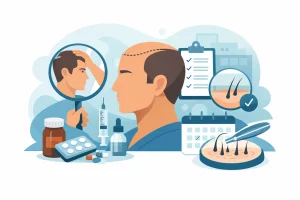
How to Prepare for Hair Transplant Surgery
Learn how to prepare for hair transplant surgery with clear advice on assessments, medicines, scalp care, recovery planning and realistic expectations.
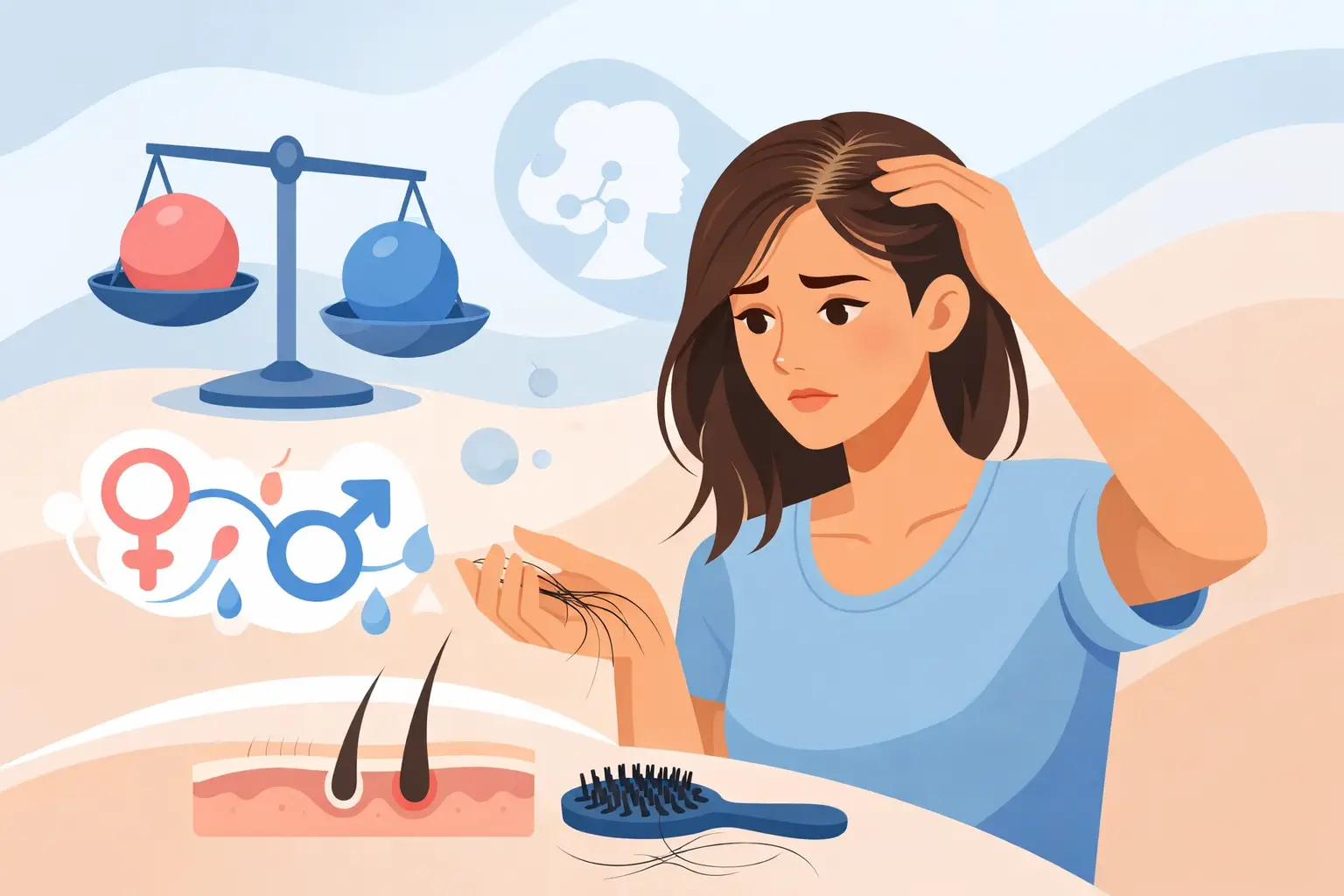
You may first notice it in the shower drain, along your part line, or when your ponytail feels thinner than it used to. If you have been asking, can hormone imbalance thin hair, the answer is yes – and for many women, it is one of the most common reasons hair starts shedding, losing density, or refusing to grow the way it once did.
Hormonal hair thinning can feel confusing because it rarely shows up the same way for everyone. Some women see sudden shedding after childbirth or a stressful period. Others notice gradual thinning at the crown, widening through the part, or a general loss of volume that seems to happen without a clear reason. What matters is this: when hormones are involved, the issue is not just cosmetic. It is a signal that the body may be under strain or out of balance.
Yes, and the effect can be significant. Hair follicles are highly sensitive to changes in the body, especially shifts in estrogen, progesterone, testosterone, thyroid hormones, insulin, and cortisol. When these levels move outside their healthy range, the hair growth cycle can shorten, more hairs can enter the shedding phase, and strands may grow back finer than before.
This is why hormonal hair loss often feels different from everyday shedding. It is not just a few extra strands on wash day. It may look like reduced density, slower regrowth, visible scalp, or hair that seems weaker and more fragile over time.
That said, hormone-related hair thinning is not always permanent. In many cases, once the underlying trigger is identified and managed properly, the hair can stabilize and improve. The key is getting the right diagnosis early rather than guessing with supplements, oils, or trend-driven products.
Your hair grows in a cycle. Most strands spend years in the growth phase, then move into a resting phase before shedding. Hormones help regulate how long each phase lasts and how healthy the follicle remains.
When hormone levels shift, more follicles can be pushed into the shedding phase too soon. In other cases, follicles become more sensitive to androgens, which are hormones such as testosterone and DHT. This sensitivity can gradually shrink the follicle, leading to finer, shorter hair over time.
This is where many women become frustrated. The scalp may look healthy, and there may be no pain or visible irritation, yet density keeps declining. That is one reason hormonal hair thinning is often missed or dismissed in the early stages.
Several different hormonal patterns can lead to hair loss, and each one tends to have its own clues.
Both an underactive thyroid and an overactive thyroid can disrupt the hair cycle. Women with thyroid-related hair loss often notice diffuse thinning across the whole scalp rather than one isolated patch. Hair may also feel dry, brittle, or harder to style.
If thyroid imbalance is part of the picture, there are usually other signs too, such as fatigue, weight changes, low mood, sensitivity to cold or heat, or changes in skin texture. Hair loss may be one of the first visible signs, but it is rarely the only one.
Estrogen helps support hair in its growth phase. When estrogen levels drop, shedding can increase. This is especially common after pregnancy, during perimenopause, and after menopause.
Postpartum shedding is a classic example. During pregnancy, higher estrogen levels keep more hairs in the growth phase. After delivery, that support falls quickly, and many hairs shift into shedding at once. It can feel alarming, but it is also very common.
Perimenopause and menopause can be more complex. The change is often slower, and women may notice both increased shedding and a gradual reduction in volume, especially around the part line and crown.
Polycystic ovary syndrome, or PCOS, is one of the most frequent hormonal causes of female hair thinning. In PCOS, higher androgen activity can affect the follicles, leading to female pattern thinning. This often appears as reduced density at the top of the scalp while the frontal hairline is relatively preserved.
Women with PCOS may also experience irregular periods, acne, weight changes, or unwanted facial hair. Not every woman has every symptom, which is why proper assessment matters. Hair thinning may be the complaint that finally leads to a diagnosis.
Stress does not just affect mood. It can influence cortisol levels and trigger a type of shedding called telogen effluvium. This often starts a few months after a stressful event, illness, major life change, or period of poor sleep.
The shedding can be dramatic, but stress-related hair loss is often reversible when the trigger is addressed. Still, stress can also overlap with thyroid issues, nutritional deficiencies, and androgen sensitivity, so it should not automatically be blamed as the only cause.
Hormonal hair loss is not always dramatic at first. More often, it starts subtly. You may notice more scalp visibility under bright light, a part that keeps widening, or styling that no longer gives the same fullness.
Diffuse thinning across the scalp is common with thyroid issues and stress-related shedding. Thinning focused on the crown or central part is more suggestive of androgen-related hair loss, including PCOS and female pattern hair loss. Increased shedding after childbirth or during menopause often points toward estrogen shifts.
There is some overlap, which is why visual clues alone are not enough. Two women can have very similar-looking thinning with completely different root causes.
Hair loss products are marketed as if every kind of thinning has the same solution. In reality, treating hormone-related hair loss without identifying the exact cause can waste valuable time.
For example, a woman with thyroid imbalance may keep trying scalp serums when the issue is systemic. A woman with PCOS may focus only on vitamins while androgen sensitivity continues unchecked. Another may assume stress is the cause when iron deficiency or menopause is also involved.
This does not mean every case needs aggressive treatment. It means the plan should match the reason. That is where specialist evaluation becomes essential.
A thorough assessment looks beyond the hair itself. It considers your medical history, menstrual history, age, stress levels, family pattern, scalp condition, and recent life events. Blood work may be recommended to evaluate thyroid function, iron status, vitamin levels, and hormonal markers where appropriate.
Scalp and follicle analysis can also help determine whether the hair is actively shedding, miniaturizing, or struggling to regrow. These distinctions matter because they shape what treatment is likely to help and how long improvement may take.
At a specialist clinic such as Dubai Hair Doctor, this type of personalized evaluation is often what gives women clarity after months or even years of uncertainty. Not every thinning pattern is hormonal, but when it is, the difference between guessing and knowing can change the outcome.
In many cases, yes. The best results usually come from treating both the internal trigger and the scalp environment. If hormone imbalance is contributing to hair loss, improvement depends on the specific cause, how long it has been present, and whether the follicles are still active.
For some women, addressing the medical imbalance is enough to reduce shedding and support regrowth. Others benefit from combining medical management with targeted hair restoration support such as scalp therapy, growth-stimulating treatments, and a structured home care plan.
This is where honesty matters. Hair that has been thinning for years may take time to respond. Some cases improve quickly once shedding is controlled, while others require ongoing support to maintain density. A trustworthy plan should set realistic expectations rather than promise instant regrowth.
If hair shedding has lasted more than a few months, your part is widening, your scalp is becoming more visible, or your hair texture has changed noticeably, it is worth getting assessed. The earlier the cause is identified, the better the chance of protecting the follicles before thinning progresses.
You should also seek expert advice if hair loss is affecting your confidence, especially if you have other symptoms such as irregular cycles, fatigue, acne, unexplained weight changes, or major postpartum or menopausal changes. Hair loss is often deeply personal, but it should never be brushed off as something you simply have to accept.
The right support is not about selling a one-size-fits-all solution. It is about understanding why your hair is changing and building a plan around your biology, your lifestyle, and your long-term goals.
If your hair feels different and you cannot explain why, trust that instinct. Sometimes the first visible sign of hormone imbalance is not how you feel internally – it is what you see in the mirror, asking for attention before the problem grows larger.
Learn how to prepare for hair transplant surgery with clear advice on assessments, medicines, scalp care, recovery planning and realistic expectations.
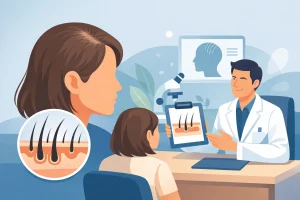
Hair thinning can have many causes. Learn how a specialist scalp assessment identifies triggers and builds a clear plan for healthier, fuller-looking hair.
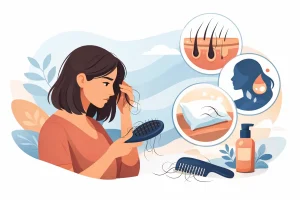
What causes female hair loss? Learn about hormones, stress, nutrition, scalp health and medical factors, plus when personalised expert care can help you.
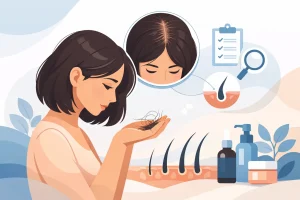
Female hair loss treatment starts with a specialist assessment, scalp health and a personal plan for stronger, fuller-looking hair and renewed confidence.