
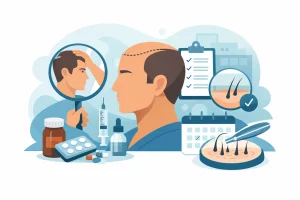
How to Prepare for Hair Transplant Surgery
Learn how to prepare for hair transplant surgery with clear advice on assessments, medicines, scalp care, recovery planning and realistic expectations.
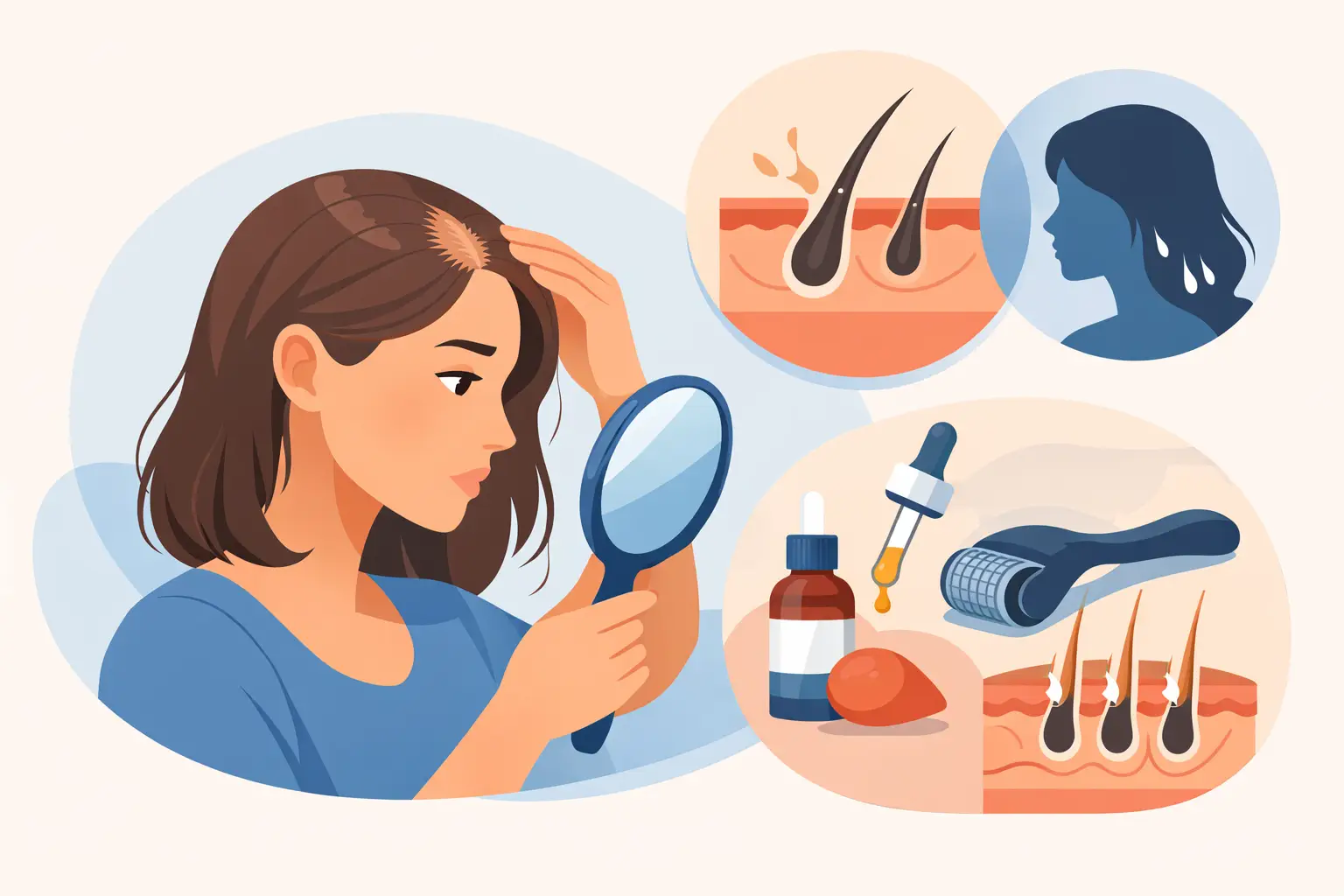
A widening part, more hair in the shower drain, a ponytail that feels thinner than it used to – these are often the first signs of female alopecia. For many women, the change is gradual enough to second-guess at first, then suddenly impossible to ignore. What matters most at that stage is not guessing, but understanding why it is happening and what can be done about it.
Female alopecia is not one single condition. It is a broad term for hair loss in women, and the cause can vary significantly from one person to the next. Two women may notice similar thinning, yet need completely different treatment plans.
That is why generic advice so often falls short. Hair loss may be driven by genetics, hormones, nutritional issues, inflammation, medical conditions, stress, or damage to the scalp and hair follicles over time. In some cases, more than one factor is involved.
For women, the emotional side is also very real. Hair loss often affects confidence, social comfort, and the way you see yourself day to day. A clinically sound approach should make room for both sides of the problem – visible hair changes and the emotional weight that comes with them.
This is one of the most common forms of female alopecia. It usually appears as diffuse thinning over the crown, a wider part line, or reduced density without complete bald patches. Genetics and hormones often play a central role.
This type tends to progress gradually. Because the change can be slow, many women wait until significant density has been lost before seeking help. Early treatment usually offers more options and better preservation of existing hair.
Telogen effluvium is a shedding condition that often appears after stress on the body. Common triggers include illness, surgery, rapid weight loss, childbirth, medication changes, emotional stress, or nutritional deficiency. Hair may come out more noticeably during washing or brushing, and the shedding can feel sudden and alarming.
The key detail is timing. Shedding often starts weeks to months after the trigger, which makes the connection easy to miss. In many cases, recovery is possible once the underlying issue is identified and corrected, but prolonged triggers can keep the cycle going.
Alopecia areata is an autoimmune form of hair loss that typically causes round or oval bald patches. Some women experience one or two small areas, while others may see more extensive loss involving the scalp, brows, or lashes.
This condition can be unpredictable. Regrowth may occur, but relapse is also possible. That makes specialist assessment especially important, both for diagnosis and for choosing appropriate treatment at the right stage.
Repeated tension from tight hairstyles, extensions, or certain styling habits can lead to traction alopecia. Heat, chemical processing, and chronic scalp irritation may also contribute to breakage and reduced density.
This is one of the clearest examples of why cause matters. If hair loss is driven by ongoing tension or scalp stress, treatment cannot rely on growth support alone. The damaging trigger has to stop, and the scalp needs a chance to recover.
Hormonal change is one of the biggest reasons women experience hair loss. Pregnancy, postpartum shifts, perimenopause, menopause, thyroid dysfunction, and androgen-related sensitivity can all affect the hair growth cycle. In some women, polycystic ovary syndrome also plays a role.
Nutritional status matters more than many people realize. Low iron, protein deficiency, vitamin D insufficiency, and restrictive dieting can all disrupt healthy growth. Hair is not essential tissue from the body’s perspective, so when the system is under strain, follicles often reflect it early.
Scalp health is another overlooked factor. Inflammation, buildup, itching, excess oil, flaking, and untreated scalp conditions can create an environment where healthy growth is harder to maintain. A healthy scalp does not guarantee thick hair, but an unhealthy scalp can absolutely make hair loss worse.
Then there is the genetic factor. If women in your family experienced thinning, especially with age or hormonal changes, your own risk may be higher. That does not mean nothing can be done. It simply means your treatment plan should focus on both slowing progression and supporting stronger long-term density.
Some signs are obvious, such as more visible scalp or noticeable patchiness. Others are subtler. A part line that looks wider in photos, reduced volume when styling, a thinner braid, or hair that no longer holds coverage at the temples can all point to early female alopecia.
Scalp symptoms also matter. Persistent itching, burning, tenderness, scaling, or excess shedding deserve attention, especially when they continue for weeks. Hair loss is not always just about the strands themselves. Sometimes the scalp is signaling the underlying problem first.
If the change has been ongoing for more than a few months, or if it feels sudden and severe, it is worth having it assessed properly rather than trying one product after another.
A useful diagnosis starts with detail. The pattern of loss, the timeline, your medical history, family history, recent stressors, hormonal changes, scalp symptoms, and nutrition all matter. This is why quick cosmetic recommendations often miss the mark.
A specialist assessment may include scalp examination, hair density review, pull testing, and discussion of possible blood work when deficiencies or hormonal issues are suspected. In some cases, diagnosis is straightforward. In others, it takes a more layered view because the hair loss is being influenced by several factors at once.
That level of precision matters because treatment for postpartum shedding is different from treatment for female pattern hair loss, and both are different again from managing inflammatory scalp disease or autoimmune patch loss.
Treatment depends on the cause, the duration, and whether the follicles are still active. This is where honesty matters. Not every woman needs the same intervention, and not every case responds at the same pace.
Topical or medical therapies may help support regrowth or slow progression in certain types of female alopecia. If hormonal influence is part of the picture, addressing that component may be necessary. When nutritional deficiency is involved, correcting it can make a meaningful difference, but only if it is done based on real need rather than guesswork.
Scalp-focused treatment is often an important part of the plan. If the scalp is inflamed, congested, excessively oily, or unhealthy, improving that environment can help support better follicle function. For some women, this is the missing piece after months of trying products that focus only on the hair shaft.
PRP therapy can also be considered in suitable cases. Because it uses your own platelet-rich plasma to support follicle activity, it is often chosen by women looking for a non-surgical, clinically led approach to improving hair quality and density. Results vary, and it tends to work best as part of a tailored plan rather than a stand-alone quick fix.
For more advanced loss, transplant support may be appropriate, but this depends heavily on diagnosis, donor suitability, and long-term planning. Surgery is not the first answer for every woman, especially when active shedding or untreated scalp issues are still present.
At Dubai Hair Doctor, this is exactly why individualized care matters. The goal is not to place every woman into the same treatment pathway, but to identify what is driving her hair loss and build a plan around that.
Timing is a major factor. The earlier female alopecia is assessed, the better the chance of preserving existing density and improving regrowth potential. Waiting too long can reduce options, especially if follicle miniaturization has been progressing for years.
Consistency also matters. Hair growth is slow, and treatment usually needs time. Many women expect visible change within weeks, but meaningful improvement often takes months. That does not mean the plan is not working. It means hair biology follows its own timeline.
The final piece is realism. Some cases can achieve strong regrowth. Others focus more on stabilizing loss, thickening what remains, and preventing further decline. Good care is not about overpromising. It is about giving you a clear, evidence-based path forward.
If you are noticing thinning, shedding, or scalp changes, the most helpful next step is not another guess. It is getting clear answers from someone who understands female hair loss in all its complexity – and treats it with the care it deserves.
Learn how to prepare for hair transplant surgery with clear advice on assessments, medicines, scalp care, recovery planning and realistic expectations.
Hair thinning can have many causes. Learn how a specialist scalp assessment identifies triggers and builds a clear plan for healthier, fuller-looking hair.
What causes female hair loss? Learn about hormones, stress, nutrition, scalp health and medical factors, plus when personalised expert care can help you.
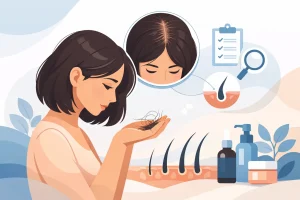
Female hair loss treatment starts with a specialist assessment, scalp health and a personal plan for stronger, fuller-looking hair and renewed confidence.