
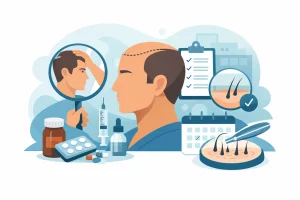
How to Prepare for Hair Transplant Surgery
Learn how to prepare for hair transplant surgery with clear advice on assessments, medicines, scalp care, recovery planning and realistic expectations.
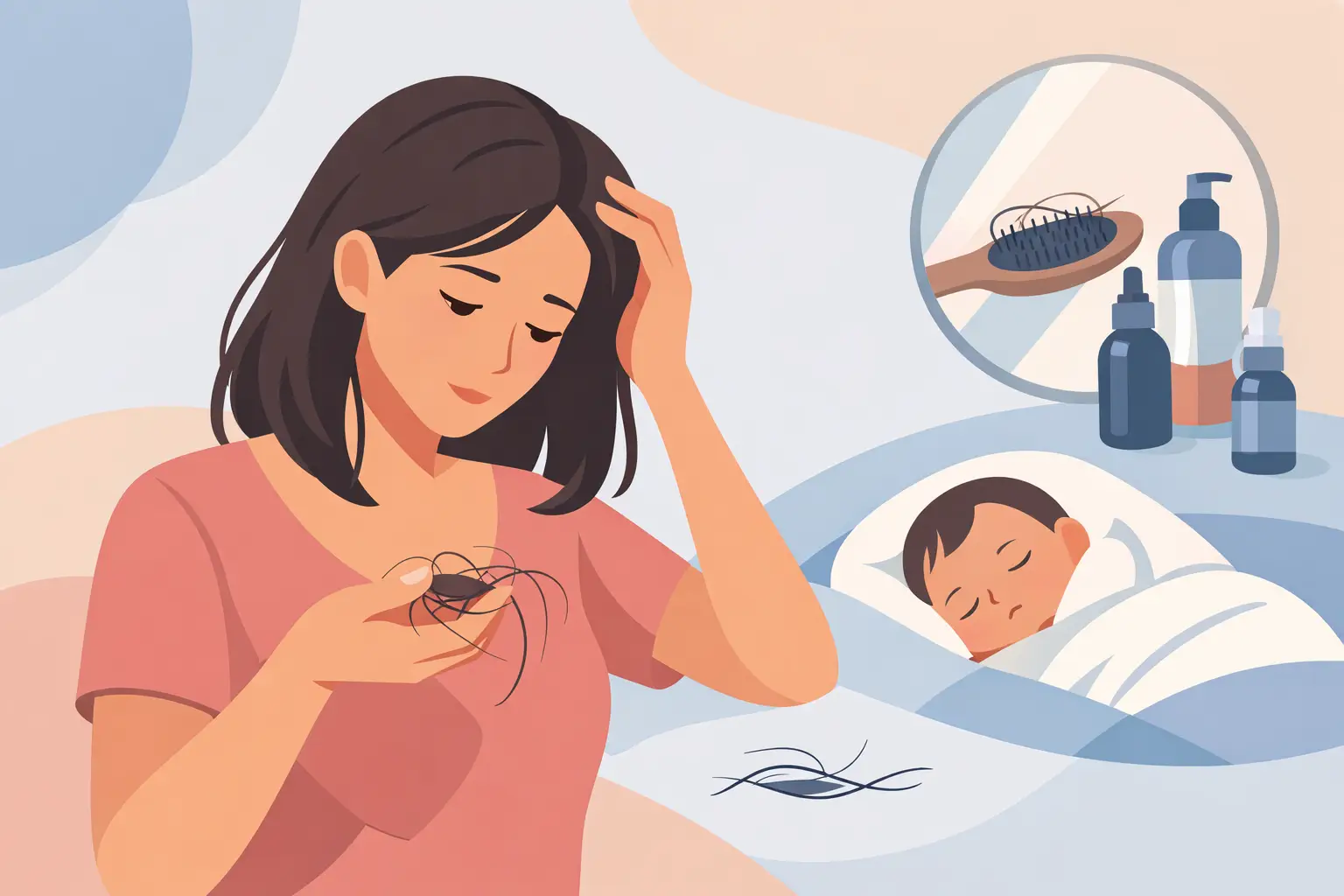
Seeing more hair in the shower a few months after giving birth can feel surprisingly alarming, even when you have been told it is “normal.” Postpartum hair loss treatment is not about chasing miracle products or masking the problem. It starts with understanding why shedding happens, what is temporary, and when your hair needs more than patience.
For many women, postpartum shedding begins around two to four months after delivery and peaks soon after. During pregnancy, higher estrogen levels keep more hairs in the growing phase, which is why hair often feels fuller. After birth, hormone levels shift quickly, and those extra hairs move into the shedding phase at once. The result can look dramatic, especially around the hairline, temples, and part line.
Postpartum hair loss usually presents as diffuse shedding rather than isolated bald patches. You may notice more strands on your pillow, in your brush, or gathered at the drain. Hair may feel thinner overall, and styling can become more difficult because density changes before length does.
That said, not every case of hair loss after pregnancy is simple postpartum shedding. This is where many women lose time. If the shedding is severe, continues beyond the expected window, or is paired with scalp irritation, widening part lines, or visible thinning that keeps progressing, there may be another trigger involved. Low iron, thyroid imbalance, vitamin deficiencies, traction from tight hairstyles, or an underlying pattern of female hair thinning can all overlap with the postpartum phase.
This is the part often missed online. There is no single postpartum hair loss treatment that fits everyone because not every woman is losing hair for the same reason.
If the issue is classic postpartum telogen effluvium, the treatment plan may be conservative and focused on scalp health, nutritional support, and monitoring regrowth. If blood work suggests low ferritin or thyroid changes, correcting those factors matters more than buying another serum. If pregnancy has unmasked female pattern hair loss, a longer-term restoration plan may be needed.
A specialist consultation can help distinguish between temporary shedding and a condition that needs targeted support. That distinction matters because the earlier the correct cause is identified, the easier it is to protect density and plan realistic next steps.
In straightforward postpartum shedding, time is often part of recovery, but that does not mean doing nothing is the best approach. Good treatment supports the scalp environment, protects fragile regrowth, and addresses any correctable internal factors.
A healthy scalp gives new hair the best chance to grow well. If the scalp is inflamed, oily, flaky, or sensitive, shedding can feel worse and regrowth may be weaker. Gentle scalp assessments and targeted scalp therapy can be useful when there is buildup, irritation, or compromised scalp balance.
This is also where women benefit from expert guidance rather than random trial and error. Harsh exfoliants, heavy oils, or aggressive home treatments can sometimes make things worse, especially when the scalp is already reactive after hormonal shifts.
Postpartum recovery places real demands on the body. Iron depletion, low vitamin D, inadequate protein intake, and thyroid dysfunction can all contribute to prolonged shedding. If you are breastfeeding, under stress, sleeping poorly, or recovering from a difficult birth, those factors can add pressure too.
Treatment may include reviewing blood markers, daily intake, and medical history. The goal is not to over-supplement. It is to identify what is genuinely low or suboptimal and correct it safely. More is not always better, and unnecessary supplements can be just as unhelpful as ignoring a real deficiency.
Some women recover fully with supportive care and time. Others want a more active strategy, especially if the shedding is intense, confidence is affected, or regrowth appears slow. In selected cases, in-clinic treatments such as PRP therapy may be considered as part of a personalized restoration plan.
PRP is not a one-size-fits-all answer, and it is not appropriate for every postpartum patient at every stage. The right timing depends on your medical history, breastfeeding status, scalp condition, and whether the diagnosis is truly postpartum shedding alone or a mixed picture. Honest guidance matters here. A good plan is built around suitability, not sales.
This is one of the most important conversations in female hair loss care. Pregnancy and childbirth can act as a trigger, but sometimes they also reveal hair loss that was already developing in the background.
If you had thinning before pregnancy, a family history of female hair loss, or persistent widening through the top of the scalp, postpartum shedding may be amplifying an existing issue. Likewise, if shedding continues well past the first year postpartum without clear regrowth, it is worth investigating further.
A specialist will usually look at the pattern of loss, the timing, scalp condition, medical history, and possible systemic contributors. That level of detail is what separates a tailored treatment plan from generic reassurance.
Women often feel pressure to act quickly, which is understandable. But urgency can lead to over-treatment.
Very tight ponytails, extensions, heat-heavy styling, harsh bleaching, and frequent chemical services can increase breakage and stress already vulnerable hair. Trend-driven products can also create false expectations. A shampoo cannot reverse hormone-driven shedding on its own, and social media advice rarely accounts for postpartum physiology.
It is also wise to be careful with medications or active ingredients promoted for hair growth without professional advice, particularly if you are breastfeeding or managing postpartum recovery. Safe treatment should always come before fast treatment.
This depends on the cause. In classic postpartum shedding, visible shedding often settles within several months, but fullness can take longer to return because hair growth is slow. Baby hairs around the front and temples are often an early sign that the cycle is normalizing.
If there are underlying deficiencies, thyroid issues, scalp inflammation, or genetic thinning, improvement may take longer and usually requires a more structured plan. Hair restoration is rarely instant. The women who do best are usually the ones with the clearest diagnosis, the most appropriate treatment, and realistic expectations about timing.
For women who care about both results and reassurance, the best postpartum hair loss treatment is rarely the most advertised one. It is the one matched to your diagnosis, stage of recovery, and long-term hair goals.
That may mean simple monitoring and supportive care. It may mean blood testing and nutritional correction. It may mean advanced scalp treatment or PRP as part of a broader strategy. And sometimes it means recognizing that what looks postpartum is actually a different form of hair loss that deserves specialist attention.
At Dubai Hair Doctor, that is exactly how we approach female hair loss – with evidence, honesty, and treatment plans built around the individual rather than the trend. For many women, that alone brings relief. When you know what is happening, the next step feels far less overwhelming.
If your shedding feels excessive, lasts longer than expected, exposes more of the scalp, or leaves you unsure whether what you are seeing is normal, it is reasonable to seek expert help. You do not need to wait until the thinning becomes severe to ask better questions.
Hair loss after childbirth can be temporary, but the emotional impact is still real. Looking tired, thinner, or unlike yourself at a stage when so much is already changing can affect confidence more than people realize. You deserve clear answers, not vague reassurance.
The right treatment begins with being taken seriously. And when hair recovery is supported early, thoughtfully, and with the right diagnosis, there is every reason to feel hopeful about what comes next.
Learn how to prepare for hair transplant surgery with clear advice on assessments, medicines, scalp care, recovery planning and realistic expectations.
Hair thinning can have many causes. Learn how a specialist scalp assessment identifies triggers and builds a clear plan for healthier, fuller-looking hair.
What causes female hair loss? Learn about hormones, stress, nutrition, scalp health and medical factors, plus when personalised expert care can help you.
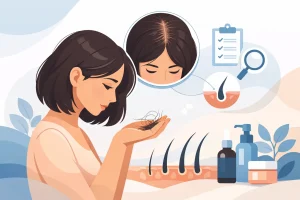
Female hair loss treatment starts with a specialist assessment, scalp health and a personal plan for stronger, fuller-looking hair and renewed confidence.