
Perimenopause Hair Loss Solutions That Work
Perimenopause hair loss solutions start with the right diagnosis. Learn what helps, what to avoid, and when specialist treatment makes sense.
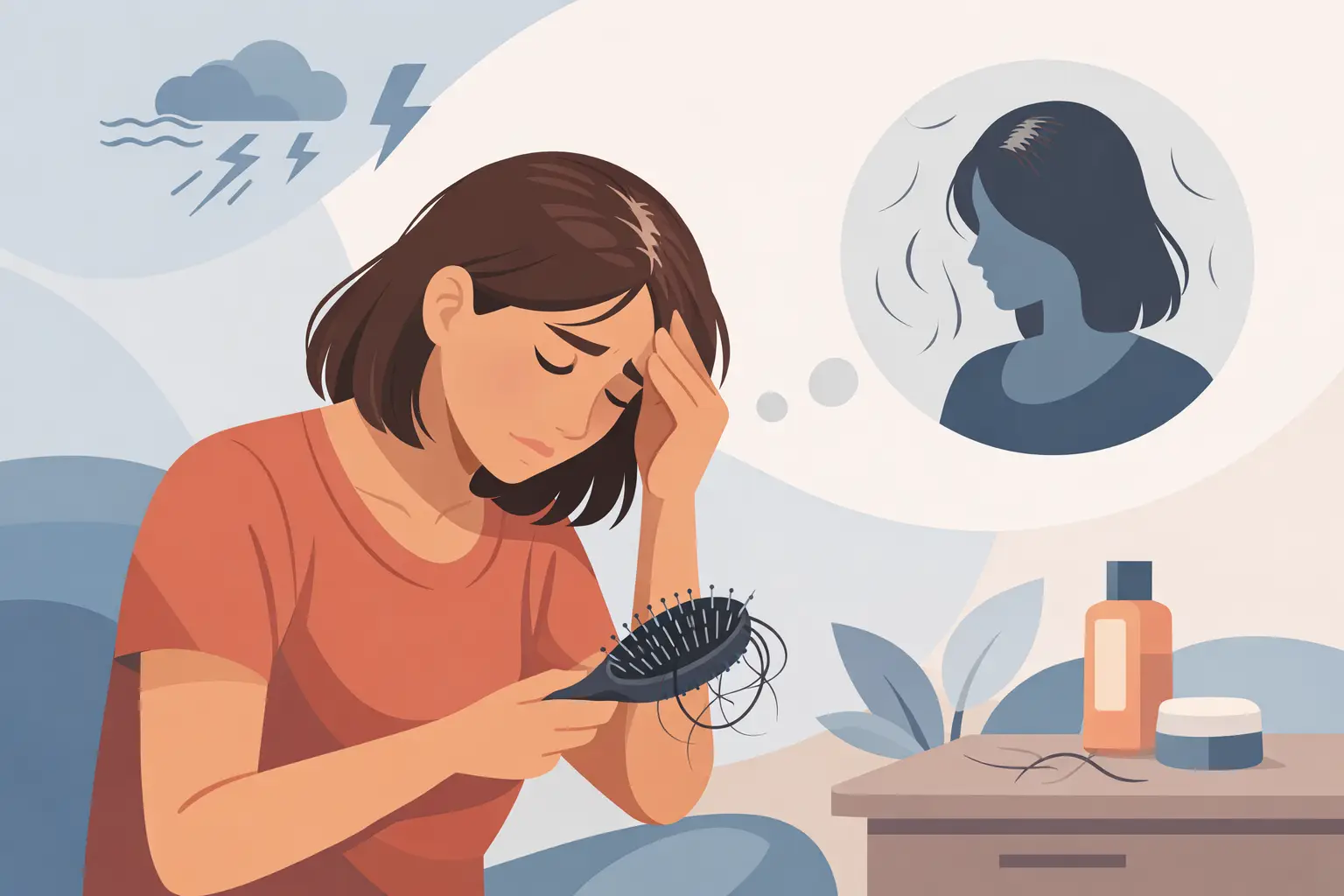
You may notice it first in the shower drain, on your pillow, or caught in your hairbrush more than usual. For many women, that moment creates a second wave of stress almost immediately. Stress related hair loss in women is common, but that does not make it feel any less personal. When your hair starts thinning, the question is rarely just “why is this happening?” It is also “will it stop, and will my hair come back?”
The reassuring answer is that stress can trigger real, visible hair shedding, and in many cases it can improve. The more honest answer is that not every case is simple. Stress may be the main cause, or it may be exposing an underlying issue that was already developing quietly in the background.
Hair grows in cycles. At any given time, most follicles are actively growing, some are transitioning, and some are resting before they shed. Significant physical or emotional stress can push more hairs than usual into the resting phase. A few weeks or months later, those hairs begin to shed at once. This pattern is commonly known as telogen effluvium.
This is why hair loss after stress often feels sudden, even though the trigger may have happened earlier. A difficult divorce, grief, burnout, surgery, a high fever, extreme dieting, poor sleep, or a period of intense anxiety can all disrupt the normal hair cycle. By the time shedding becomes obvious, the stressful event may already feel “over,” which can make the connection easy to miss.
Stress does not affect every woman in the same way. Two people can go through similar pressure and have very different hair outcomes. Genetics, hormone balance, iron levels, thyroid function, scalp health, and existing hair density all influence how noticeable the shedding becomes.
In most cases, stress-related hair loss is diffuse. That means the thinning happens across the scalp rather than in one sharply defined patch. Your ponytail may feel smaller. Your part may look wider. You may see increased shedding while washing or styling, yet still not notice a single bald spot.
That said, stress can also contribute to other patterns. In some women, emotional strain worsens scalp inflammation, dandruff, or compulsive pulling behaviors. In others, it can accelerate female pattern thinning that was already beginning. This is one reason proper diagnosis matters. Hair loss that appears to be caused by stress is not always caused by stress alone.
This is where many women lose time trying products that promise quick regrowth. If shedding starts during a stressful season, it is tempting to assume stress is the whole explanation. Sometimes it is. Sometimes it is not.
A woman may experience telogen effluvium after emotional stress, but also have low ferritin, vitamin D deficiency, thyroid imbalance, postpartum hormonal shifts, polycystic ovary syndrome, or early androgenetic hair loss. In those cases, stress acts more like the tipping point than the single cause.
That distinction affects treatment. If the shedding is temporary telogen effluvium, the main goal is to support recovery and reduce ongoing disruption to the hair cycle. If stress has unmasked a deeper issue, progress depends on treating both the trigger and the underlying condition.
Some shedding after stress can settle gradually on its own, but there are times when it deserves specialist attention. If your hair loss lasts longer than a few months, your scalp feels itchy or sore, your hairline is changing, or the thinning is becoming more pronounced rather than stabilizing, it is worth investigating properly.
Patchy hair loss should also be assessed rather than assumed to be stress-related. So should sudden thinning paired with fatigue, irregular periods, weight changes, or brittle nails. These clues can point to hormonal or nutritional contributors that need more than reassurance.
Women often wait because they hope the problem will reverse naturally. That can happen, but waiting too long may allow a treatable condition to progress. Early evaluation gives you clarity and a better chance of protecting density.
Often, yes. If stress related hair loss in women is caused by telogen effluvium and the trigger has passed, hair usually begins recovering over time. The challenge is that hair recovery is slower than hair shedding. Shedding may feel dramatic and immediate, while regrowth takes patience.
Most women do not see a full change overnight. New growth can take several months to become visible, and overall density may take longer to feel restored. That timeline can be frustrating, especially if the stressor itself has already taken an emotional toll.
Recovery also depends on whether the follicles are healthy and whether there are other barriers to growth. If scalp inflammation, nutritional deficiency, or female pattern hair loss is involved, the hair may not rebound fully without targeted treatment.
The right approach starts with diagnosis, not guesswork. A specialist consultation should look at the pattern of loss, the timing, your medical history, recent stressors, scalp condition, and possible internal triggers. This is far more useful than choosing a shampoo and hoping for the best.
Treatment may include scalp-focused therapy, nutritional correction where appropriate, and a plan to reduce ongoing shedding while encouraging stronger regrowth. For some women, supportive therapies such as PRP can be useful when the scalp and follicles need additional stimulation, especially if shedding has become prolonged or if there is a mixed picture involving female pattern thinning.
The trade-off is that not every treatment suits every patient. PRP can be valuable, but it is not a magic solution for all forms of hair loss. Supplements may help if there is a confirmed deficiency, but more is not always better. Even stress management itself is important, yet telling a woman to “just relax” is neither realistic nor medically helpful.
A stronger plan is individualized. It should account for your biology, your lifestyle, the severity of shedding, and how long the problem has been present.
When women think about hair loss, they often focus only on the strands they can see. The scalp receives less attention, yet it plays a central role in how well follicles function. Excess oil, buildup, inflammation, tenderness, and flaking can all affect the scalp environment and complicate recovery.
That does not mean every irritated scalp causes hair loss, but it does mean scalp health should not be treated as separate from hair health. A thorough trichology-led assessment can help identify whether the scalp is simply stressed or whether there is a condition that needs direct treatment.
For women who want a more precise approach, this is often the turning point. Instead of trying generic products, they begin to understand what their scalp and hair actually need.
Hair loss in women is often minimized by people who have never experienced it. They may say it is temporary, or that no one else notices. But when you see your volume changing, your confidence often changes with it. Styling becomes harder. Social plans can feel more stressful. You may start checking mirrors, lighting, and photographs in ways you never used to.
That emotional burden matters because it can deepen the stress cycle. Worry about hair loss can create more distress, which may keep the body under pressure for longer. This does not mean the problem is “all in your head.” It means the physical and emotional sides of hair loss are closely linked, and both deserve support.
This is one reason specialist care matters. Women usually feel more confident once they have a clear explanation, realistic expectations, and a treatment path that is built around their specific case.
If your shedding has become persistent, your scalp feels unhealthy, or your hair is not recovering as expected, professional guidance is the next sensible step. A specialist clinic can help distinguish short-term stress shedding from female pattern loss, hormonal causes, or scalp disorders that need more focused treatment.
At Dubai Hair Doctor, this process is centered on individualized assessment rather than one-size-fits-all advice. For women who want privacy, clarity, and a science-backed plan, that kind of expert support can make the experience feel far less overwhelming.
Hair loss after stress can be frightening, but it is also one of the clearest examples of why your hair should never be treated in isolation from your health. When the cause is understood properly, the path forward becomes much easier to trust.
Perimenopause hair loss solutions start with the right diagnosis. Learn what helps, what to avoid, and when specialist treatment makes sense.
Postpartum hair loss treatment starts with the right diagnosis. Learn what helps, what to avoid, and when to seek expert care after childbirth.
An online hair loss consultation can save time and provide expert guidance. Learn what to expect, who it suits, and when in-person care matters.
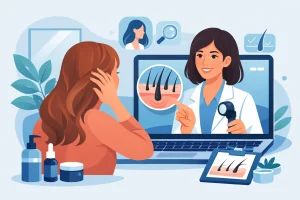
A trichologist for women online can assess hair loss, thinning, and scalp issues with expert guidance, privacy, and a personalized care plan.