
PRP Therapy for Hair Loss: Does It Work?
PRP therapy for hair loss can help reduce shedding and improve density. Learn how it works, who it suits, and what results to expect.
If you have noticed more hair in the shower drain, a widening part, or thinning around the crown, the question often comes quickly – does PRP help hair regrowth, or is it just another treatment that sounds promising on paper? For many women, PRP can be a meaningful part of a hair restoration plan. But the honest answer is not simply yes or no. It depends on why the hair loss is happening, how early it is caught, and whether the scalp is healthy enough to respond.
PRP is one of the most talked-about in-clinic hair treatments because it uses your body’s own growth factors to support weakened follicles. That makes it appealing, especially for women who want a non-surgical option. Still, PRP is not a miracle fix, and it works best when it is chosen for the right patient at the right stage.
In many cases, yes – PRP can help improve hair regrowth, reduce shedding, and increase thickness. It is most useful when hair follicles are still alive but underperforming. That means it tends to work better for thinning hair than for areas that have been completely bald for a long time.
For women, this distinction matters. Female hair loss is often diffuse, hormonal, stress-related, inflammatory, or connected to scalp conditions rather than a simple receding pattern. A treatment that stimulates follicles may help, but only if the underlying cause is understood first. If the scalp is inflamed, the body is low in iron, or the hair loss is driven by untreated hormonal imbalance, PRP alone may not deliver the result you are hoping for.
This is why specialist diagnosis matters more than the trend itself. The treatment can be helpful, but it must fit the biology of your hair loss.
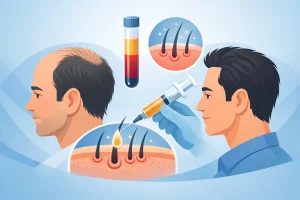
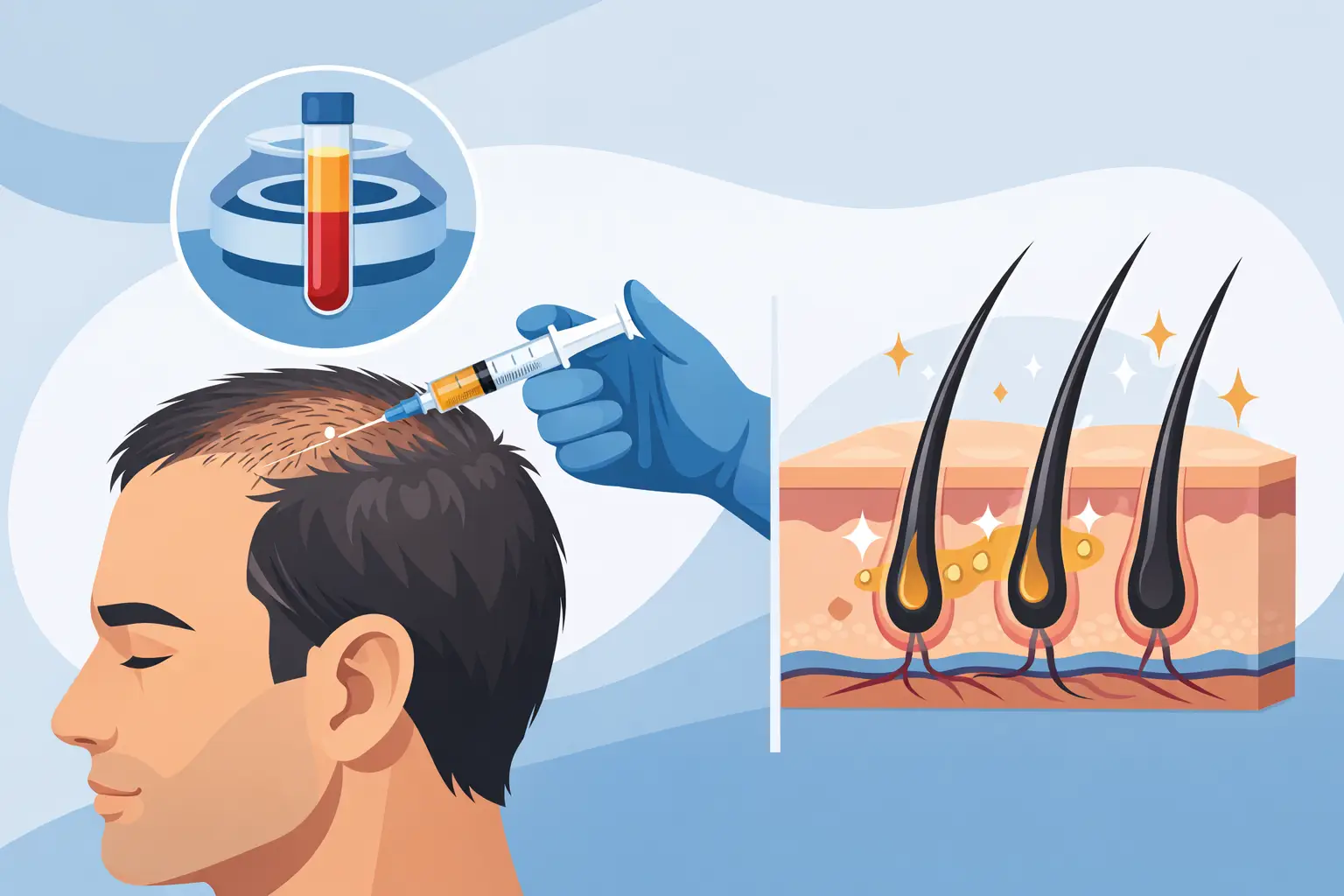
PRP stands for platelet-rich plasma. A small sample of your blood is taken, processed to concentrate the platelets, and then injected into the scalp. Platelets contain growth factors that may support tissue repair, circulation, and follicle activity.
In practical terms, the goal is to create a better environment for struggling hair follicles. PRP may help extend the growth phase of the hair cycle, improve hair shaft quality, and reduce active shedding over time. Some women notice that their hair feels stronger before they see obvious new growth. That is normal. Hair restoration usually begins with stabilization.
The timeline is important to understand. Hair does not regrow overnight, even when a treatment is working. Most patients need a series of sessions, followed by maintenance, and visible change often takes a few months. Early gains tend to show up as less shedding, better density, and improved texture rather than dramatic regrowth in a few weeks.
PRP tends to perform best in women with early to moderate thinning, especially when follicles are miniaturized rather than permanently inactive. It may be recommended in cases of female pattern hair loss, stress-related shedding recovery, post-transplant support, or as part of a broader plan for scalp and follicle health.
It can also be helpful for women who want a treatment that feels more natural because it is based on their own blood components rather than a synthetic injectable. That said, natural does not mean universally effective. The quality of the protocol, the depth of assessment, and the health of the scalp all influence results.
Women who start earlier generally do better than women who wait until the scalp is visibly sparse in multiple areas. Once a follicle has been inactive for too long, stimulation becomes far less predictable. This is one reason many patients regret waiting until the problem feels severe.
This is where honest guidance matters. PRP is not the right answer for every type of hair loss. If the shedding is caused by a nutritional deficiency, thyroid dysfunction, severe hormonal shifts, traction, active scalp disease, or scarring alopecia, the first priority is addressing the cause. Without that, injections may produce limited or short-lived improvement.
There are also cases where a patient is a better fit for combination therapy. PRP may be paired with scalp treatments, medical-grade home care, oral or topical treatment plans, low-level light therapy, or hair transplant support depending on the diagnosis. In real practice, the best outcomes often come from individualized plans rather than one treatment used in isolation.
This is especially true for female patients, whose hair loss patterns can be more complex and more emotionally exhausting. Many women have already spent months trying shampoos, supplements, or social media recommendations before seeking specialist care. By the time they consider PRP, they do not just want a procedure. They want a clear reason for why their hair is changing and a plan that respects both results and realism.
A realistic expectation is improvement, not instant transformation. PRP may help reduce excessive shedding, increase the appearance of fullness, and support healthier regrowth in thinning areas. For some women, the change is subtle but significant – less scalp showing under bright light, more body at the roots, or a part line that looks narrower over time.
The degree of change varies. Younger follicles tend to respond better than long-dormant ones. Consistency matters. So does the treatment schedule. Most protocols involve an initial series followed by maintenance sessions based on how your scalp responds.
The other factor patients often overlook is photography. Hair changes happen gradually, and many women do not notice progress day to day. Standardized before-and-after images are one of the most reliable ways to judge whether PRP is helping.
It is better to think of PRP as one tool, not the winner of a universal comparison. Some patients respond very well to PRP. Others do better with topical or oral therapies, especially when hormone sensitivity plays a major role. Some need inflammation control first. Others need transplant planning because the density loss is too advanced for stimulation alone.
PRP has advantages. It is non-surgical, uses your own blood, and usually involves minimal downtime. It can fit well into a professional lifestyle and appeals to women who want a treatment with a strong regenerative focus. But it also has limits. It requires commitment, results are gradual, and not every patient is an ideal candidate.
A good clinician will not oversell it. They will explain whether your follicles are likely to respond, what else may need to be treated, and what success should look like in your specific case.
The most effective hair restoration plans begin with diagnosis, not treatment menus. Two women can have similar-looking thinning and need completely different care. One may have androgen-related miniaturization. Another may have inflammatory scalp buildup, low ferritin, or shedding after illness or stress. Treating them the same way would be a mistake.
This is why a trichology-led approach is valuable. Close scalp examination, medical history, symptom timing, and hair pattern assessment all help determine whether PRP is likely to help or whether another step should come first. At Dubai Hair Doctor, this individualized approach is central because visible hair recovery depends on understanding the full picture, not just offering a popular procedure.
For women in particular, that level of care can make the process feel less overwhelming. Instead of guessing, you get transparent guidance. Instead of trying random fixes, you follow a plan built around your scalp, your hair history, and your goals.
Before committing to treatment, ask what type of hair loss you have, whether your follicles appear active, how many sessions are typically recommended, what maintenance will likely be needed, and how progress will be measured. These questions are not just practical. They protect you from starting a treatment with the wrong expectations.
You should also ask what happens if PRP is only partly effective. A thoughtful clinic will already be thinking one step ahead, with options for combination care or further investigation if needed.
Hair loss can feel deeply personal, especially when it affects how confident you feel at work, socially, or even in photos. The right treatment should never be chosen from urgency alone. It should be chosen from evidence, timing, and a clear understanding of what your scalp needs now.
If you are wondering whether PRP is worth considering, the better question may be whether your hair loss has been properly diagnosed yet. Once that piece is clear, the next step tends to feel far less confusing.
PRP therapy for hair loss can help reduce shedding and improve density. Learn how it works, who it suits, and what results to expect.
Find the best treatment for female hair loss with expert guidance on causes, proven options, and how personalized care supports lasting results.
Learn what causes female hair thinning, from hormones and stress to scalp issues and nutrition, and when to seek expert treatment.
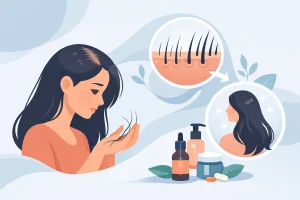
Find the right hair thinning treatment for women with expert insight on causes, diagnosis, scalp health, PRP, and personalized care.