Finding the Best Hair Fall Clinic Near Me: A Dubai Patient’s Guide
When your search for a “hair fall clinic near me” in Dubai returns a seemingly endless list of options, it can feel overwhelming and deeply…

Does your reflection show hair that feels dull, damaged, or thinner than it used to be? Navigating the world of hair care can be overwhelming, with an endless stream of conflicting advice making it difficult to know what your hair truly needs. We understand that these concerns are deeply personal and can significantly impact your confidence, leaving you to wonder if the changes you’re seeing are normal or a sign of something more.
This comprehensive guide was created to provide clarity and compassionate, science-backed solutions. We will delve into the fundamental biology of hair growth, helping you understand what your strands need to thrive from the follicle up. You will learn actionable strategies to build a routine that fosters genuine health, identify the root causes of common problems, and gain the knowledge to confidently decide when it’s time to consult a specialist. Consider this your definitive resource for restoring your hair’s strength, vitality, and your renewed sense of self.
Your hair is far more than a style statement; it is a complex biological marvel that reflects your internal health and well-being. Achieving the healthy, vibrant hair you desire begins not with products, but with knowledge. To provide effective, science-backed care, we must first understand the intricate science of a single strand. This foundational knowledge is the first step toward building a routine that nurtures your hair from the inside out and helps restore your confidence.
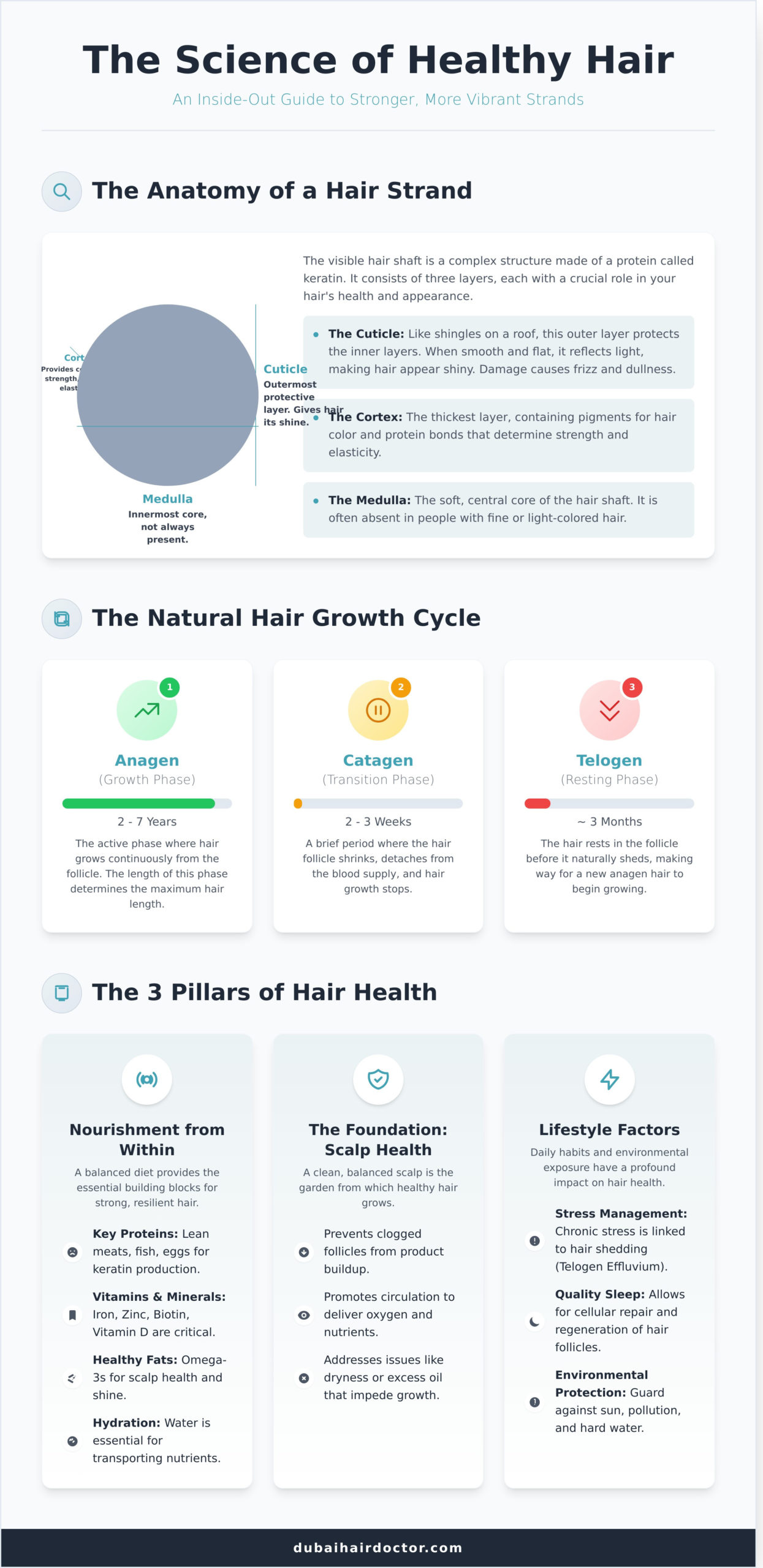
Think of your hair like a tree. The part you see-the shaft-is like the trunk, while the living, growing part-the follicle-is the root system hidden beneath the scalp’s surface. The visible hair shaft is primarily composed of a strong protein called keratin and has three distinct layers:
Every strand on your head undergoes a continuous, three-phase cycle. Understanding this process is crucial for distinguishing between normal daily shedding and potential hair loss concerns that may require professional attention.
A truly effective care plan is never one-size-fits-all. It must be tailored to your hair’s unique characteristics. Identifying these traits is key to selecting the right treatments and products. Consider three primary factors:
Many people believe the secret to beautiful hair lies in a bottle, but this is only part of the story. While professional products are essential for protection and styling, the journey to resilient, vibrant hair is fundamentally an inside-out job. True hair wellness is built upon a foundation of core pillars that nourish, support, and protect each strand from its very root. While it is always wise to follow expert-backed dermatologist tips for healthy hair for your external routine, these efforts are magnified when your body has what it needs internally. Let’s explore the three non-negotiable pillars: nutrition, scalp health, and lifestyle.
What you eat directly translates into the strength and vitality of your hair. The cells that construct your hair follicles are some of the fastest-dividing cells in the body, requiring a constant supply of key nutrients to build strong, healthy strands. Prioritise these essentials:
This principle of “beauty from within” isn’t limited to human hair care; a nutritious diet is also the secret to a pet’s healthy, glossy coat. For dog owners interested in this approach, you can visit DF Dog Food to see how fresh, human-grade ingredients can support their well-being.
Think of your scalp as the garden from which your hair grows-if the soil isn’t healthy, the plants cannot flourish. Your scalp is living skin that requires dedicated care. Issues like product buildup, excess oil, or dryness can clog follicles and impede growth. A clean, balanced scalp environment with healthy circulation is vital for delivering oxygen and nutrients to the hair roots, which in turn promotes stronger, more resilient growth and helps restore your confidence.
Your daily habits have a profound and often overlooked impact on your hair’s condition. Chronic stress, for instance, is clinically linked to a type of hair shedding known as telogen effluvium. Quality sleep is when your body focuses on cellular repair and regeneration, including the cells in your follicles. Furthermore, environmental factors-especially the intense sun, pollution, and mineral-rich hard water common in the UAE-can cause oxidative stress, leaving hair dry, brittle, and damaged over time.
A consistent, personalized routine is the foundation of healthy hair. Rather than adopting fleeting trends, a science-backed approach tailored to your specific needs will yield lasting, visible results and help restore your confidence. This framework is designed to be both effective and sustainable, focusing on gentle techniques that preserve the integrity of every strand.
Effective cleansing begins with understanding your scalp’s unique biology. Choose a shampoo formulated for your scalp type-be it oily, dry, or sensitive-not just your hair texture. In the UAE’s warm climate, you may feel the need to wash more frequently, but listen to your scalp; over-washing can strip its protective natural oils. When you shampoo, concentrate the product on the scalp and roots, using your fingertips to gently massage and lift away impurities. The lather that rinses down the lengths is sufficient to cleanse them without causing unnecessary friction or dryness.
Conditioner is a non-negotiable step for restoring moisture and protecting the inner hair shaft. Its primary role is to seal the cuticle-the outer protective layer of the strand-which enhances shine and prevents damage. Apply conditioner only from the mid-lengths to the ends, where strands are oldest and most susceptible to dryness. For an intensive moisture infusion, especially beneficial in air-conditioned environments, integrate a deep conditioning mask into your routine once a week. A lightweight leave-in conditioner can also provide daily defense against environmental stressors.
How you handle your hair when it’s wet and fragile can dramatically impact its health. The goal is to minimize both heat damage and mechanical stress. Adopting gentle practices is paramount for preventing breakage and maintaining strength.
While a focus on nutrition and gentle care forms the foundation of hair wellness, it’s equally important to recognise when something isn’t right. Understanding the difference between a normal phase and a potential concern is the first step toward effective action. This guide is designed to help you identify common warning signs, empowering you to know when it’s time to seek a professional, compassionate diagnosis.
It can be alarming to see strands in your brush or the shower drain, but shedding is a natural part of the hair growth cycle. Losing 50-100 hairs per day is completely normal. The key is to distinguish this from a more significant issue.
Persistent flakes, itching, or inflammation may indicate more than simple dandruff. The scalp is a delicate ecosystem, and several conditions can disrupt its balance, requiring targeted treatment for relief and to support healthy growth.
Self-diagnosing scalp issues can lead to ineffective treatments. A troubled scalp needs an expert diagnosis to ensure you receive the correct care. Learn about our scalp treatments.
Unlike hair loss, which originates at the follicle, damage affects the hair shaft itself. Chronically damaged hair not only looks and feels unhealthy but is also structurally weak.
Key indicators include persistent frizz, a rough or straw-like texture, and visible split ends. This damage is typically caused by over-processing with chemical treatments, excessive heat styling, and mechanical stress from harsh brushing or tight hairstyles. A compromised outer cuticle layer leaves the inner core of the hair vulnerable, leading directly to increased breakage and brittleness.
While home care and a healthy lifestyle form the foundation of hair wellness, some concerns require specialized expertise. Guesswork and self-treating with generic products can often delay effective solutions or even worsen the underlying issue. Seeking a professional diagnosis is the most empowering step you can take towards resolving persistent hair and scalp problems, ensuring you receive a targeted, science-backed treatment plan designed specifically for you.
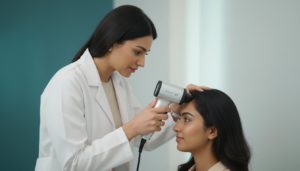
A trichologist is a certified specialist who focuses on the science of the hair and scalp. Unlike a hairstylist, who addresses the cosmetic appearance of hair, or a dermatologist, who treats all skin conditions, a trichologist has a singular, in-depth focus. Their expertise lies in diagnosing the root causes of hair loss, breakage, and scalp disorders to create holistic and effective treatment pathways that restore health from the follicle up.
It’s time to seek expert advice if you are experiencing persistent issues that don’t resolve on their own. We recommend booking a consultation if you notice:
Your first consultation is a comprehensive and compassionate process designed to understand your unique situation and restore your confidence. You can expect:
If you are ready to move beyond uncertainty and find real solutions, professional guidance is your next step. Booking a consultation can provide the answers and compassionate care you need to restore your hair and your confidence.
Embarking on your journey to healthier hair begins with the knowledge you’ve gained today. Understanding the science of your strands and building a consistent, nourishing routine are the foundational pillars of scalp wellness. However, it is just as crucial to recognize when at-home care isn’t enough to address persistent concerns.
If you are experiencing issues like thinning or scalp discomfort, you don’t have to navigate this journey alone. At Dubai Hair Doctor, we combine medical expertise with compassionate care. Led by a certified and experienced trichologist in Dubai, we specialize in female hair loss and scalp health, offering science-backed, personalized treatment plans designed to restore your vitality and confidence. Your path to beautiful, healthy hair is within reach.
Ready to uncover the root cause of your concerns and restore your confidence? Book a consultation with our expert trichologist today.
On average, hair grows approximately 1.25 centimetres (about half an inch) per month. However, this rate is highly individual and is influenced by several key factors, including your genetics, age, overall health, and diet. While you cannot change your genetic predisposition, you can support optimal growth by maintaining a balanced diet and a healthy scalp environment. Consistent, science-backed care is crucial for encouraging your hair to grow at its personal best rate.
Yes, a definitive link exists between significant stress and hair loss. Conditions like Telogen Effluvium can be triggered by physical or emotional stress, prematurely pushing a large number of hair follicles into the shedding phase. While seeing increased shedding can be distressing, it is reassuring to know that this type of hair loss is often temporary. Managing stress and seeking professional guidance can help restore your natural hair growth cycle and your confidence.
A dermatologist is a medical doctor who treats diseases of the skin, nails, and hair. A trichologist, on the other hand, is a specialised expert who focuses exclusively on the science of the hair and scalp. While a dermatologist may diagnose and treat medically-related hair loss, a trichologist provides a highly focused, in-depth analysis of scalp health, hair breakage, and environmental factors, offering a holistic approach to restoring hair and scalp wellness.
Not necessarily. The effectiveness of a hair product is determined by its formulation and suitability for your specific hair type, not its price. While some premium products contain highly concentrated ingredients, many affordable options perform exceptionally well. A 250 د.إ shampoo is not inherently superior to a 60 د.إ one if its ingredients don’t address your scalp’s needs. A professional consultation can help identify the key ingredients you should look for, ensuring a wise investment.
In the UAE, hard water is a common concern. You likely have it if your shampoo lathers poorly, your hair feels constantly dry or straw-like, and you notice a chalky buildup on your scalp or fixtures. These excess minerals coat the hair shaft, preventing moisture from penetrating and leading to brittleness and breakage. Using a specialised clarifying shampoo weekly or installing a shower head filter can effectively combat these damaging effects and restore your hair’s softness and shine.
This is a common myth. Trimming your hair does not physiologically impact the rate of growth, which occurs at the follicle within your scalp. However, regular trims are essential for maintaining healthy length. By removing split ends, you prevent breakage from traveling up the hair shaft. This preserves the hair you have grown, making it appear thicker, healthier, and ultimately longer over time. It is a crucial step for length retention, not growth acceleration.
When your search for a “hair fall clinic near me” in Dubai returns a seemingly endless list of options, it can feel overwhelming and deeply…
Is your bathroom cabinet filled with expensive products that promised results but delivered only disappointment? The cycle of trying and failing is…
The journey with hair loss is deeply personal and often overwhelming. When you’re faced with countless clinics and confusing information, the search…

Noticing your hair is thinning can be a deeply personal and often distressing experience. If you’ve felt a dip in your confidence while navigating a…