
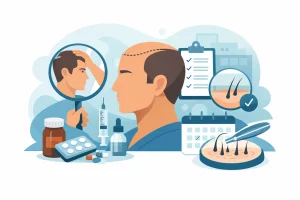
How to Prepare for Hair Transplant Surgery
Learn how to prepare for hair transplant surgery with clear advice on assessments, medicines, scalp care, recovery planning and realistic expectations.
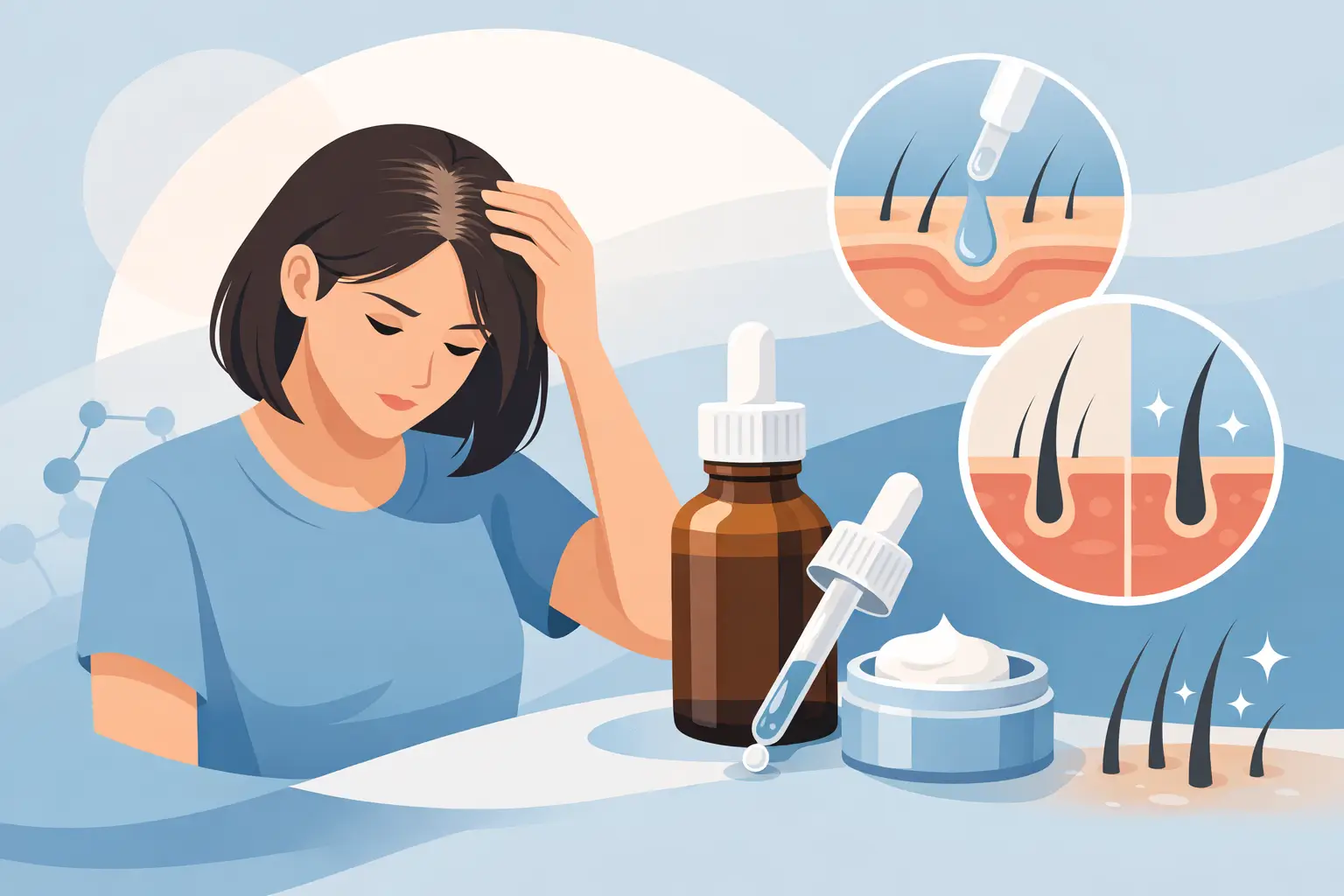
If you have started seeing more scalp at the parting, more hair on the brush, or a ponytail that feels thinner than it used to, you are not imagining it. Female hair loss treatment minoxidil is often one of the first medically supported options discussed for women with ongoing thinning, but it works best when it is chosen for the right reason and used with the right expectations.
For many women, that is the difficult part. Hair loss is rarely just about hair. It affects confidence, changes how you style yourself, and can leave you trying product after product without knowing what is actually causing the problem. Minoxidil can be very effective, but it is not a one-size-fits-all answer and it should not replace a proper assessment.
Minoxidil is a topical treatment applied directly to the scalp. In women, it is most commonly used for female pattern hair loss, where hair gradually becomes finer and less dense, especially through the top and crown. Rather than creating instant regrowth, minoxidil helps support the hair growth cycle by prolonging the growth phase and encouraging miniaturised follicles to produce thicker, stronger strands over time.
That distinction matters. Minoxidil is not a miracle product and it does not repair every cause of shedding. If the issue is driven by iron deficiency, thyroid imbalance, inflammatory scalp disease, severe stress, hormonal shifts, or traction from tight styling, those factors also need attention. When the underlying trigger is missed, even a good treatment may deliver disappointing results.
The women most likely to benefit from female hair loss treatment minoxidil are those with pattern thinning, especially when the hair part is widening and overall density is reducing gradually. It can also be helpful in some cases of chronic shedding where the hair has struggled to recover fully, although this needs careful clinical judgement.
It is often considered when there is still active follicle function. In simple terms, minoxidil tends to work better where follicles are producing thinner hairs than in areas where follicles have been inactive for a long time. Early intervention usually gives a better response than waiting until thinning becomes advanced.
That said, suitability depends on your scalp, your medical history, and your treatment goals. Some women want a straightforward home-based option. Others are looking for a fuller plan that combines topical treatment with scalp-focused care, nutritional support, or in-clinic therapies such as PRP. The right choice is personal, not generic.
This is where honest guidance matters most. Minoxidil can slow progression, reduce shedding, and improve density, but the change is usually gradual. Most women need several months of consistent use before they can judge whether it is helping. Early shedding can also happen in the first weeks as hairs move through the cycle more quickly. That can be unsettling, but it is not always a sign that the treatment is failing.
Visible improvement, when it happens, tends to show as less scalp show-through, slightly stronger coverage at the parting, and thicker-feeling hair rather than dramatic transformation overnight. Some women see excellent improvement. Others achieve stabilisation rather than major regrowth, and that can still be a very worthwhile outcome if hair loss had been progressing.
The important point is continuity. Minoxidil generally needs ongoing use to maintain the benefit. If it is stopped, the gains are usually lost over time. For women considering it, this should be part of the decision from the outset.
Minoxidil only works if it reaches the scalp consistently. That sounds obvious, yet many women apply too much to the hair rather than the skin, use it irregularly, or stop before it has had enough time to work. Clean, dry scalp application is usually recommended, with attention focused on the thinning areas rather than the lengths of the hair.
Routine matters more than perfection. A treatment that is theoretically ideal but never used properly will not outperform a simpler plan followed consistently. If your haircare routine already feels overwhelming, that should be considered when choosing the format and schedule.
You also need to watch for scalp tolerance. Some women do very well with minoxidil. Others experience dryness, irritation, flaking, or sensitivity, particularly if the scalp barrier is already compromised. In those cases, adjusting the formula, reviewing the scalp condition, or changing the broader treatment plan may be necessary.
One reason women hesitate with minoxidil is fear of side effects. The concern is understandable, especially if you have already felt let down by products that promised more than they delivered. In practice, the most common issues are local scalp irritation and the inconvenience of long-term use.
Some women worry about unwanted facial hair growth. This can happen, particularly if the product spreads beyond the scalp or if individual sensitivity is high, but careful application reduces the risk. Others dislike the feel of certain formulations in the hair, which is a practical issue rather than a medical one, yet still important for real-life adherence.
Pregnancy and breastfeeding require extra caution. Women who are pregnant, trying to conceive, or breastfeeding should seek medical advice before using minoxidil. This is not a situation for guesswork.
The most common mistake with hair thinning is starting treatment before confirming the cause. Female hair loss can look similar in the mirror while being very different clinically. Pattern loss, telogen effluvium, traction alopecia, low ferritin, polycystic ovary syndrome, and scalp inflammation may overlap or coexist. Without identifying what is driving the change, treatment becomes trial and error.
A specialist assessment should look at more than the hair itself. Scalp health, history of shedding, hormones, nutrition, stress, family background, styling habits, and timing all matter. A woman who developed thinning after childbirth, rapid weight loss, illness, or medication changes may need a different plan from someone with gradual hereditary pattern loss over several years.
This is also why personalised care tends to produce better outcomes than buying a product in isolation. Minoxidil may absolutely be part of the answer, but it should sit inside a wider strategy that makes sense for your scalp and your life.
In clinic practice, the strongest results often come from combination planning rather than relying on a single product. That might mean minoxidil alongside scalp health optimisation, treatment for dandruff or inflammation, nutritional correction where needed, or PRP for selected patients. If someone is preparing for a transplant or supporting transplanted hair afterwards, the conversation becomes even more specific.
At Dubai Hair Doctor, this is exactly how we approach female thinning. The aim is not simply to recommend a popular product. It is to understand why the hair has changed, what recovery is realistically possible, and how to build a treatment plan that protects both results and confidence over time.
For some women, minoxidil is the correct first step. For others, it is better introduced after scalp irritation is controlled or after blood markers and hormonal factors have been reviewed. There is no loss in taking a measured approach. In fact, it often prevents months of frustration.
If your hair loss has been going on for more than a few months, is becoming more visible, or is affecting your confidence daily, it is worth seeking specialist advice rather than waiting for it to settle on its own. The same applies if you have scalp itching, burning, tenderness, heavy shedding, widening of the part, or a family history of pattern hair loss.
You should also seek help if you have tried minoxidil and stopped because of irritation, confusion about how to use it, or uncertainty about whether it is working. These are common reasons women give up too early. Often, the issue is not that treatment is impossible. It is that the plan was not properly tailored.
Hair recovery is rarely instant, but it should feel guided. When you know the cause, understand the timeline, and have a plan that fits your scalp and your routine, treatment becomes far less overwhelming.
If minoxidil is right for you, it can be a valuable part of restoring density and slowing further thinning. If it is not, knowing that early can save you time, money, and unnecessary disappointment. The most reassuring starting point is not the product itself, but a clear diagnosis and a treatment plan built around you.
Learn how to prepare for hair transplant surgery with clear advice on assessments, medicines, scalp care, recovery planning and realistic expectations.

Hair thinning can have many causes. Learn how a specialist scalp assessment identifies triggers and builds a clear plan for healthier, fuller-looking hair.
What causes female hair loss? Learn about hormones, stress, nutrition, scalp health and medical factors, plus when personalised expert care can help you.
Female hair loss treatment starts with a specialist assessment, scalp health and a personal plan for stronger, fuller-looking hair and renewed confidence.